
How often do you find yourself cautiously saying “no” to a suggestion or idea? We strive to weigh everything, assess the risks and potential inconveniences. This is normal and reasonable. But what if sometimes this rationality becomes a barrier to something new and interesting?
The phrase “why not” is not a call for mindless agreement. Rather, it is a small internal push that helps shift your gaze from possible problems to possible prospects. It is a shift in focus from “what if it goes wrong” to “what if it goes right.”
In this article, we're not going to try to convince you to say “yes” to everything. We're just going to look at how this simple mindset can sometimes open doors to new experiences, unexpected encounters, and the simple joy of spontaneity. Let's figure out when and why it's worth giving yourself a chance to say “why not.”
- Alexander Perepelkin Editorial Director of The Blueprint, partner and co-founder of Lunar Hare and Dot Comms
- Logo and corporate identity
- Zhenya Fishcheva Brand Director and Co-publisher of The Blueprint, Managing Partner at Lunar HARE
- Daria Kosareva Launch editor at The Blueprint, journalist, author of the Telegram channel It's so last season
- Truth is born of debate
- Zhenya Onegina Art Director, Director
- The eyes are afraid, but the hands do the work
- Anastasia Smirnova Media Content Manager, Community Manager, Author, Photo Editor, Launch of The Blueprint
- Illustration: Olya Marchenko
- Glamour + artistry
Alexander Perepelkin Editorial Director of The Blueprint, partner and co-founder of Lunar Hare and Dot Comms

The idea of creating digital media came to me in 2012–2013 (at the time, I was a partner and business development director at the communications agency Lunar HARE). Everyone was already using mobile phones and reading on the go, and I couldn't understand why our online glossy magazines were so weak. Our agency clients were also actively betting on digital, although no one at the big publishing houses believed in online yet. With this idea in mind, I approached Dasha Kosareva (who had just left her position as fashion director at Glamour — Ed. The Blueprint), to which she replied, “Let's give it a try!”
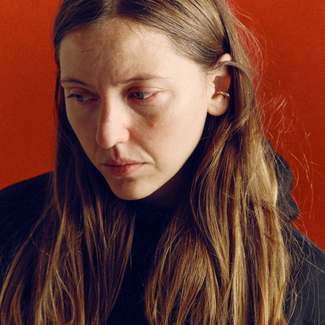
Later, Dasha and I were joined by [art director and director] Zhenya Onegina, who had recently returned from America after studying scriptwriting at NYFA. I immediately liked her approach, and we had the same references. We saw the powerful beauty content created by Into The Gloss and how Refinery 29 works with the community. We were blown away by the clean visual identity of the New York store The Line and the articles in Fantastic Man and System Magazine. Nick Knight's SHOWStudio showed us that it was possible and necessary to talk to industry insiders. We even made the same jokes. The three of us were constantly thinking up new ideas, coming up with new concepts, and being creative. I remember joking that even if nothing came of it, at least we would get free cosmetics.
Zhenya contributed a lot to the project; she worked on the website's visuals, never stood still, started filming, and worked as a director. To this day, we are still designing and coming up with some very complex formats and landing pages, and I think we are making the most of all the opportunities that digital technology offers us. I would say that we are not only interesting to read, but also very pleasant to look at.

Within the team, we argue about who came up with the name. My partner, Zhenya Fisheleva, thinks it was her, but for some reason, I'm sure it was me. But Zhenya and I definitely had the same train of thought. A blueprint in the publishing business is a magazine project where formats are tested, some pages are test-laid out, and so on. And somehow, everyone agreed on it.
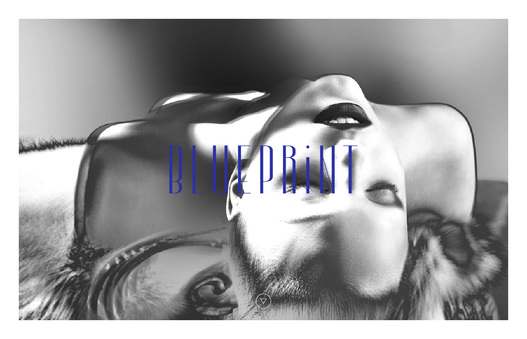
Ksenia Solovyova was absolutely right when she wrote that we have become the blueprint for the industry, setting media standards and formats. Just as our name predetermined our corporate color, so the essence of the name predetermined what we are. As they say, whatever you name a ship, that's how it will sail. In our case, this is 100% true.
Logo and corporate identity
Firststyle was created for us by Hans Unt, a designer from Estonia who is based between Bangkok and the Estonian island of Saaremaa. We met him on the social network ASmallWorld (defined by The Wall Street Journal as “MySpace for millionaires” — Note from The Blueprint), and he created the entire identity for Lunar. I've never met him in person, but I remember that he delivered everything on time and exactly as we wanted it. So when it came to The Blueprint's corporate identity, we went straight to him, and he immediately came up with something even better than we had imagined.
In his proposal, he described the website design as “clean, modern, bold, and easily recognizable.” Hans immediately understood what we needed: a sophisticated yet bold visual language that would never go out of style and would always be relevant. I remember that one of his references was the Bottega Veneta website — that's where the idea came from to color the previews on the home page blue when you hover over them.
It has always been important to us that each person on the team has their own voice, not just a function. I remember how I invited Yulia Vydolob to do marketing for us and Katya Fedorova to be the editor-in-chief. In practice, it turned out that Katya was terribly disorganized, and Yulia was not very good at marketing. But we understood that, in terms of their vision, they were both absolutely “ours.” So we simply swapped them. Yulia became a brilliant editor-in-chief, and Katya did excellent marketing. In other words, we didn't force people into positions, but tried to understand how we could best fit them into our team.
Night broadcasts are a long-standing tradition for us. We did our first Oscar broadcast at Katya Fedorova's house: we had dinner, dressed up, and posted all the news not even on Telegram, but on a waterfall widget on the website. Then many Telegram channels picked up on the idea and started broadcasting too.

I remember how, during one of the January holidays, we were preparing for Lanvin's 150th anniversary, making a video, and… nothing came of it. We just didn't have enough time. At the time, I couldn't get over the fact that we, a fashion magazine, didn't celebrate their 150th anniversary. I was terribly upset, even berating the editorial staff. I remember how Zhenya Onegina was crying over her keyboard, unable to finish the layout, and I begged her: “Zhenya, please give it to me, this isn't your last project, you'll do better next time.” It sounds funny now, but at the time, it seemed like a disaster. I think that was when we realized that we had to not only do quality work, but also strictly adhere to deadlines.
All the most memorable moments began with the phrase, “Let's give it a try.” I remember flying out of London and reading about Italian shoemaker Fabrizio Vitti, who had a huge collection of Barbie dolls, about 600 of them. I thought it would be great to photograph him in Paris, so I immediately wrote to him with an offer. I hadn't even landed in Moscow yet when he replied, and we ended up photographing him. It would seem, why would he need us? But we just allowed ourselves to dream and didn't hold ourselves back. Or, for example, during COVID, we decided to ask photographers to photograph those with whom they were self-isolating (or themselves) nude. And everyone agreed. It was a huge success, everyone was talking about it. It is still one of our favorite projects.
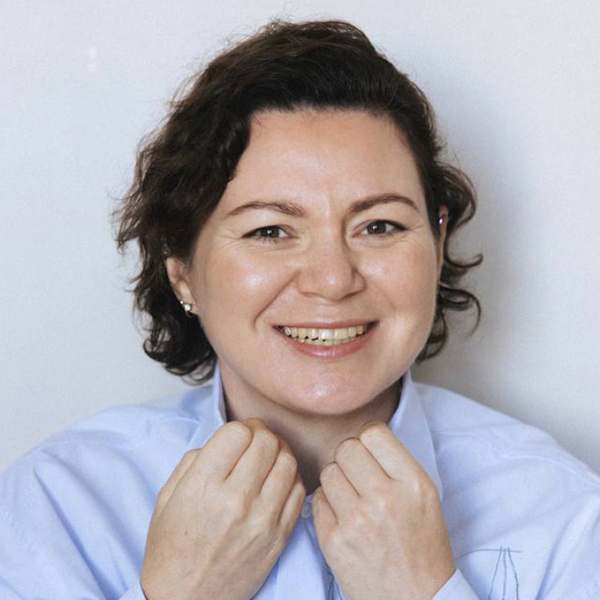
Zhenya Fishcheva Brand Director and Co-publisher of The Blueprint, Managing Partner at Lunar HARE

We launched when large publishing houses were focused exclusively on the print versions of their magazines, and their digital editorial offices either published online content from print issues or simply followed the news agenda. At the Lunar HARE communications agency, we saw how much brands around the world were betting on digital media, and we felt that it wouldn't be long before this focus shifted to Russia as well.
We realized that the time was now, and we took action. It seems like very little time passed between the idea and its implementation. After getting together with Sasha and two other co-founders of The Blueprint, Vera Panova and Yulia Rusanova, we shook hands and decided: why not? And then the intense work began.

We wanted to do something for ourselves and about ourselves, without a client (the publication was made without an investor, with our own money earned at Lunar HARE. — Note by Alexander Perepelkin). We wanted to make it beautiful and do it the way we thought was right. We wanted to write about what interests us, and read it not at the speed of a Twitter feed, but at the pace and with the thoughtfulness with which we read when we want to slow down, think, and reflect. We wanted to see a result that would inspire us.

The Blueprint is not just digital media; you can not only read it and watch it, but also go to exhibitions with us, wear or try out the results of our collaborations. For example, at Reading Camp in Peredelkino, we listen to lectures, read together, discuss, participate in workshops, and do homework. And there is shower gel that we made together with Somelove, blue dessert salt, or blue pistachio-fig granola. You can eat us, drink us, smell us, read us, watch us, and do whatever you want. In other words, The Blueprint is essentially the universe of a modern person who is interested in fashion, culture, contemporary art, and is constantly evolving.

I see that throughout our entire time working together, we have never strayed from our principles of fact-checking, factual journalism, open dialogue, and a clear understanding of what we are, who we are, and who we are for. We have a very cool and close-knit team of like-minded people and a loyal audience with whom we think along the same lines. The core is always with us, and that's very nice.
Sometimes in life there comes a moment when, instead of long doubts and analysis of “what if it doesn't work out,” it's easier to say, “why not?” This is not a call to act recklessly, but a reminder that moderate courage and a willingness to try something new — whether it's a trip, a conversation, an idea, or a change — often lead to the most interesting twists and turns. We often overestimate the risks and underestimate ourselves. But between “no” and “not yet” there can be a simple, honest “yes” — and sometimes that changes everything.
Daria Kosareva Launch editor at The Blueprint, journalist, author of the Telegram channel It's so last season
I was a fashion editor at Vogue and Glamour, and I knew Sasha Perepelkin as a representative of Lunar HARE, which worked closely with Condé Nast. When Sasha decided to start The Blueprint, I had just left Glamour, and he asked me to come up with the concept and visuals for the future media outlet from scratch. So initially, I was the first and only employee of The Blueprint. For the first few months, I collected, processed, and rethought millions of references such as Gentlewoman, T Magazine, Style.com, and Nowness to build the foundation of the project.
Then I met Zhenya Onegina, was impressed by her work, invited her to meet with Sasha, and that's how The Blueprint got its art director, thanks to whom the publication gained its unique aesthetic. Zhenya and I came up with the first versions of the website and looked for new formats for shoots and materials. A little later, I invited Svetlana Tanakina, a former colleague at Condé Nast, to join the team. Her stylistic talent finally helped us decide on the direction, and everything fell into place.


There was one goal — to make it refined.
and at the same time, it was a lively fashion media outlet that spoke to readers in human language, not bureaucratic jargon. Plus, the focus was on visual presentation, which was innovative for the Russian market.
Truth is born of debate
From the very beginning, all project participants felt like equal partners—there was no rigid hierarchy. Therefore, there were many disputes and misunderstandings, but, as usual, the truth emerged from them. In fact, as I now understand, everyone was simply sincerely rooting for the project and wanted everything to be perfect. Of course, perfection almost never happens the first time around. But it was all worth it.

Even in today's The Blueprint, I see echoes of my work — in the format of the shoots, in the materials about the industry, shopping, and lifestyle. This is in line with what I tried to lay down at the beginning of the project, and it's nice to see that. And of course, I am most proud of the fact that I invited Zhenya and Sveta to join the publication. Their work definitely set the right direction for The Blueprint's development.
Zhenya Onegina Art Director, Director
When Dasha Kosareva invited me to join the team to come up with some kind of online editorial platform, I was working as an art director for the TV show My Planet, and before that I had worked for Afisha, F5 newspaper, the w-o-s website, and PORT magazine. I really wanted to return to editorial work because television didn't live up to my expectations. I think we clicked right away at my first meeting with Sasha [Perepelkin] and his partner Yulia Rusanova; they both impressed me. They had a philosophical approach to the launch; they understood that it would take time, maybe not just a year, but several years. But they knew from the very beginning that they would have enough fuel to bring the site to its 10th anniversary.
The eyes are afraid, but the hands do the work
I remember how we shot a video at VDNKh at the Moscow Biennale of Contemporary Art in 2015. Through some connections, we managed to organize a shoot right during the dismantling of one of the main pavilions. It was quite ambitious in terms of scale, but we had to work with a small team and limited technical resources. As a result, we didn't really understand what we were doing, how to set up the lighting correctly, or how to deal with the other equipment.
We arrived at the shoot without a mood board or references. We had five models who, according to the concept, were supposed to perform Soviet gymnastics on camera. I was so scared that I would have to explain it to them somehow that I photographed all the poses on my husband at home beforehand and just silently pointed at the printed pictures. In general, it was like dancing in the dark for us, but it turned out to be a very memorable story.
At the time, I wasn't part of the glamorous crowd at all, but rather from some parallel universe of photo editors who always wear vests and pants with pockets — because at any moment you might need to crawl on all fours during a shoot. Sasha tried to turn me into a sexy lady, constantly joking that I should get root volume, at least for the holidays. But it still hasn't happened.
There were moments when it was difficult, as in any editorial office. I left the office in tears a couple of times for sure. I left my jacket at work and didn't come back. I remember Zhenya [Fisheleva] and Sasha [Perepelkin] calling me and asking me to come back. But I guess you can't imagine a real editorial office without that. And I definitely spent more than ten nights at the office because I was struggling with deadlines.
I think I basically found myself and my voice at The Blueprint. Art direction became my starting point — Sasha saw it in me, although he could have just left me as a designer. I think if it weren't for his encouragement, I wouldn't have grown. Sasha is a very demanding boss, and he can be difficult to work with. If he thinks on the level of a Madonna concert, he demands that everyone else want to produce content of that level. But with his persistence and belief in me, he shaped me into who I am today. Even though I'm quite difficult to motivate, he clearly did it better than my other bosses.
Anastasia Smirnova Media Content Manager, Community Manager, Author, Photo Editor, Launch of The Blueprint

I lived in St. Petersburg, was finishing university, and had already changed several jobs, from waitress to model. I studied journalism, but I really loved photography, wrote my thesis on the history of photography, and wanted to find a cool, “grown-up” job. I was subscribed to Zhenya Onegina in💧 (and maybe somewhere else—I don't remember), knew her as a photo editor, and thought she was cool. The position of photo editor seemed like a dream job to me.
In short, I wrote to Zhenya that I was looking for a job, and if she needed an assistant, I was even ready to move to Moscow. It turned out that Zhenya was looking for people to join her team for a new project. I did a test assignment, came for an interview, and was hired, for which I am very grateful.
The Blueprint hadn't even launched yet. Apart from the guys from Lunar HARE, who started it all, there were originally three of us on the team: Zhenya Onegina, art director; Dasha Kosareva, editor; and me, photo editor. Then a designer and a producer joined us. I consider myself lucky: I was there when the idea for The Blueprint was just taking shape. I remember well how I persuaded the guys to start working with photographer Eric Panov. I think he ultimately helped crystallize The Blueprint's visual style in photo format.


My main task was to find illustrations. At first, it was a kind of handmade media format, where everything was based on interesting essays and cool visual accompaniment, collected from available materials. I scoured blogs and archives, found a suitable photo bank, and worked with it when photos from fashion shows were needed. I collected huge folders of images on various topics, and Zhenya turned them into masterpieces: collages, cutouts, GIFs, and other beautiful things that were then effectively laid out. At that time, the site was more like an art project and looked very unusual.
Sometimes I was asked to make collages, and I searched and found references in photo archives that inspired fashion designers when creating their collections. Then I was entrusted with communicating with illustrators. And then we started doing photo shoots. We had a section called “Thing of the Week,” and I often photographed for it, sometimes on my own, sometimes with Zhenya, helping to produce large shoots.
Illustration: Olya Marchenko

Glamour + artistry
I remember arguments about what the shoot should look like: Sasha wanted more glamour and glitz, while we in the editorial office wanted more graceful modesty and artistry, with a pinch of silliness. There were a lot of emotions, but now it's funny to remember, of course. As a result, the site developed its own distinctive and recognizable style, which still sets it apart from all other Russian-language media.
We had a lot of different shoots, and they are hard to forget — there was always something strange going on. We shot at the VDNKh pavilion at night, once they painted my ear blue for a shot, set up some kind of chemical-physical laboratory for a subject shoot, looked for the most beautiful and amazing locations. It wasn't boring.


I think we all had the same goal in the editorial office: to create a relevant lifestyle and fashion media outlet without vulgarity, for people with taste and intelligence. Something that had never been seen before in Russia. The most important thing was the very talented people who wanted to do something really cool and special, rather than what was accepted and what everyone else was doing. And the team had enough freedom and support to do that, which is very, very valuable.
The phrase “Why not?” is more than just words. It is a kind of invitation to step outside your comfort zone, allow yourself to be spontaneous, and open up to new experiences. Often, the most vivid memories and important turning points in life begin with this lighthearted, almost playful thought.
Of course, this does not mean agreeing to everything recklessly. It is more about an inner attitude. When we are faced with a choice between the usual “no” out of caution and a possible “yes” out of curiosity, this phrase reminds us of the value of a lively interest in life. It helps to overcome unnecessary doubts and inertia.
Ultimately, by practicing this approach, we don't just gain new experiences. We train our minds to be more flexible and become more interesting to ourselves and others. The world becomes wider and life becomes richer, if only we sometimes smile and say, “Why not?”


