
If jazz were a river, Louis Armstrong would be its source. Simply put, without him, modern music would sound completely different. This man with a hoarse, warm voice and a radiant smile didn't just play the trumpet — he turned the idea of what music could be upside down.
His journey seems incredible. He was born in the poorest neighborhood of New Orleans and even sang on the streets for pennies as a child. Music literally saved him, and he repaid it by becoming the voice of an entire era.
Armstrong made the solo the main character in jazz. Before him, collective improvisation was the norm. Louis brought to the forefront the individual virtuoso musician, whose personality and skill could lead the entire orchestra. His trumpet sang, cried, and rejoiced.
He also taught the world to sing jazz. His vocals, that famous squeaky whisper, became as important as his trumpet. He turned his voice into a real musical instrument, using it for improvisation, and popularized “scat” — singing without words.
His personality was as vibrant as his talent. He broke down racial barriers by performing for all audiences and became perhaps America's first truly global musical ambassador. Louis Armstrong is not just the story of jazz, it is the story of how art and the human spirit triumph over circumstances.
A difficult childhood
One of the most influential musicians in history spent his childhood in the poorest neighborhood of New Orleans, where criminal incidents and shootouts were commonplace and where mainly criminals and women of easy virtue lived. Not only did crime flourish in the city, but so did racism — black residents were forbidden from visiting theaters, museums, libraries, and concert halls, and at night they were hunted by gangsters who could easily kill anyone who crossed their path.
When the boy was born, there was a long delay in registering him, which meant that for a long time it was impossible to establish Armstrong's exact date of birth. Louis grew up in poverty, sometimes having to search for food in trash cans, commit petty theft, beg, and gamble with dice. Due to a lack of funds, he dropped out of school and was unable to complete his education.
He gave his first concerts at the age of 6 on the streets of New Orleans, collecting coins from passers-by in his hat. The money for his first cornet was lent to him by a family of Jewish immigrants for whom he worked as an assistant — the older members of the family treated him like their own son. In gratitude, Louis wore a Star of David around his neck throughout his life and spoke Yiddish fluently.

Tony Bennett's best performances with Lady Gaga, Amy Winehouse, and other stars Read
He became fascinated with music behind bars
Armstrong's serious interest in music began in a reformatory for black children, where he ended up for shooting with blank cartridges. The musician spent his whole life thanking fate and the judge who sent him there, because it was from that moment on that his life began to develop differently. Unlike at home, little Louis was looked after at the reformatory, he was fed and always had a place to sleep. But most importantly, he joined the local orchestra and vocal group (it was believed that music had a good influence on young offenders). Armstrong mastered the tambourine, alto horn, horn, and cornet and became the best musician in the camp. At the same time, he began to sing and taught himself to play the drums.
He tried to fix his unique voice
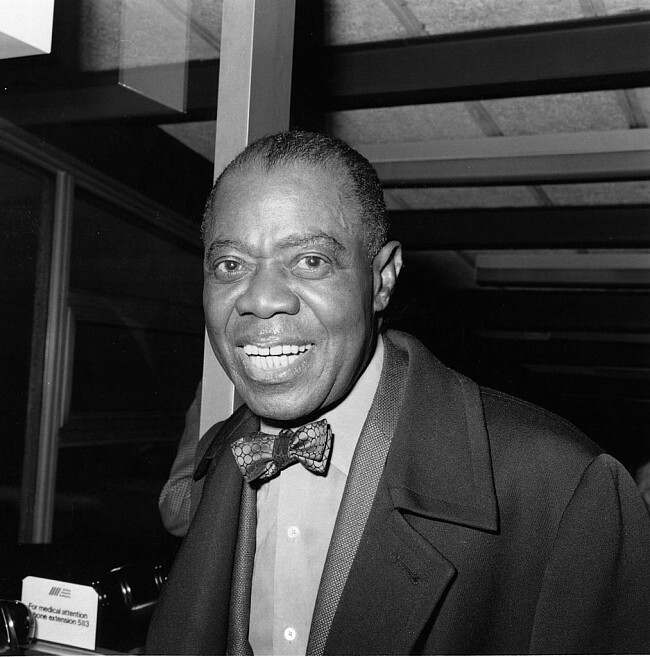
Louis Armstrong was distinguished not only by his unique style of trumpet playing, which made him one of the most sought-after musicians, but also by his recognizable squeaky voice. Thanks to the latter, Armstrong became a pioneer of scat — vocal improvisations using the voice as a musical instrument.
It is believed that he was able to hit high notes and produce such a powerful sound because he positioned his lips and tongue incorrectly when playing the wind instrument, and his hoarse voice was caused by leukoplakia — growths on the vocal cords. The musician tried to fix his voice more than once and even had two surgeries, but the surgical interventions didn't give the expected result — his voice softened for a short time, but then became hoarse again. Over time, Armstrong came to terms with it and realized that it was this hoarseness that made his voice unique.
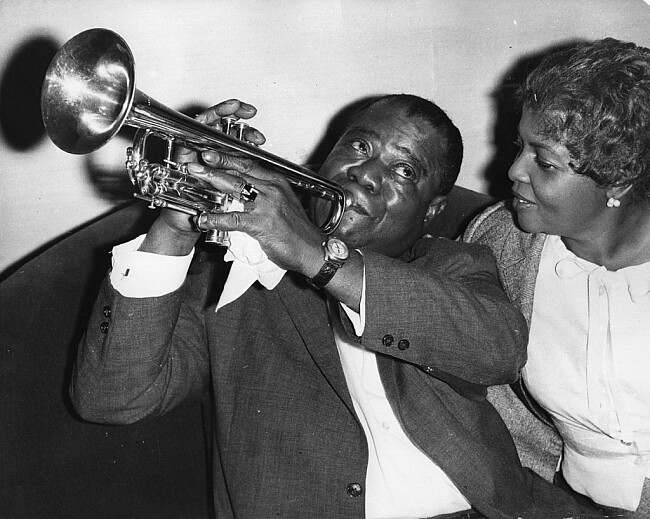
Louis Armstrong is not just a great trumpeter, he is a man who changed music. He transformed jazz from collective entertainment into a solo art form, teaching music to breathe, feel, and speak. With his loud, warm voice and soulful playing, he became the first true jazz superstar. Armstrong played as if every note were alive, and his laughter, smile, and love of life resonated in every melody. If you listen to jazz, you are always somewhere close to him.
Modest disposition
Despite growing up in a rough neighborhood, achieving worldwide fame and early success (Armstrong went on his first tour at the age of 26), he came across as a quiet and shy person. He was uncomfortable listening to compliments, and after concerts he would often jump off the stage and timidly hide behind the scenes to avoid meeting his numerous fans.
Record holder for the number of concerts
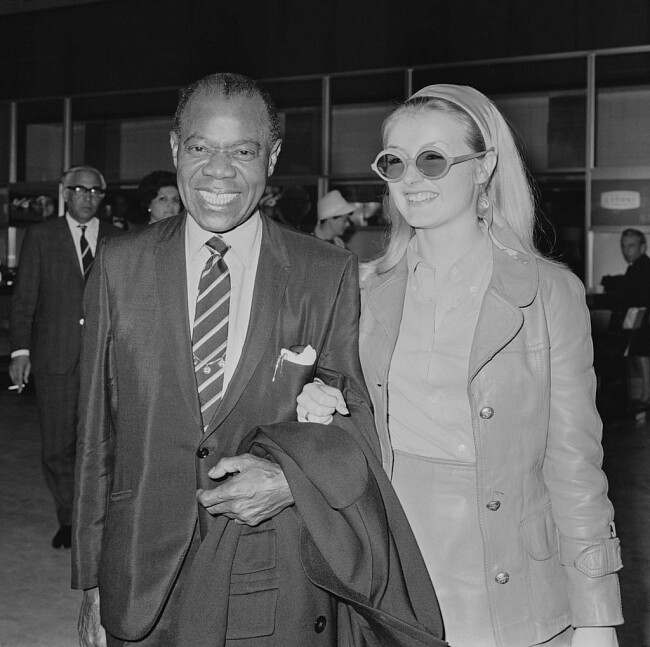
It was said that Armstrong was ready to perform 365 days a year, as he gave about 300 concerts annually. However, music was not Louis Armstrong's only field of activity — he appeared in numerous films, TV series, and TV shows, and sang in the musical Hello, Dolly! alongside Barbra Streisand. His frequent appearances on screen transformed Louis from a favorite of jazz connoisseurs into an artist popular throughout America and then around the world.
Beatlemania: a journey through the places of The Beatles in Great Britain, India, and Russia Read
He managed to become a star despite racism
When Armstrong was making his way to fame, racism still reigned in America. Despite this, he managed to become one of the first truly popular African-American performers, stand at the origins of jazz, and earn the status of an authoritative superstar. Back in 1952, he was named “the greatest musical figure of all time,” and at the end of 1963, his song Hello Dolly! surpassed The Beatles' tracks in the charts.
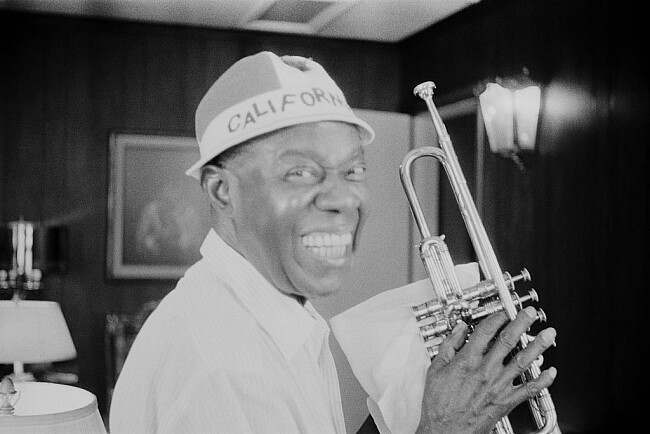
The US government tried to use Armstrong as a goodwill ambassador to promote American culture and demonstrate that not all black people in America were mistreated. In the late 1950s, there were even plans to send him to perform in the USSR, but this was prevented by another scandal related to black rights: in Little Rock, a crowd prevented African American children from entering school, and the state governor vowed not to allow black and white schoolchildren to study together. Armstrong refused to go to the Soviet Union, saying, “People there will ask what's wrong with my country — and what will I say to them?” Nevertheless, in his 69 years of life, Louis Armstrong managed not only to influence world music and American culture, but also to ultimately change public attitudes toward black rights.
Louis Armstrong is not just one of the most talented musicians, but a true pillar of jazz. His inimitable voice, full of warmth and husky charm, and his virtuoso trumpet playing created the very sound that millions of people around the world associate with jazz. He transformed jazz from collective improvisation into a solo art form, where each musician can tell their own story.
But his legacy extends far beyond music. In an era of racial segregation, his sincere, open, and joyful personality broke stereotypes. He became the first black artist to be accepted by a mass white audience as a star of the first magnitude, paving the way for future generations. His smile and famous “Oh, yeah!” were as significant as his brilliant solos.
The main lesson from Satchmo, as he was affectionately called, is simple: genuine passion and love for what you do can overcome any barriers. He didn't just play music — he shared his boundless zest for life with the world. When we listen to him, we hear not only the history of jazz, but also the voice of freedom, optimism, and humanity, which continues to inspire us today.


