
Although henna is praised for its bright color and natural benefits, my experience was not at all like the positive accounts I had heard. For my hair, what was meant to be a safe and healthy substitute for chemical dyes ended up being disastrous.
My hair’s texture changed after henna application, and not in a positive way. It became hard to work with, dry, and brittle. I knew something needed to change because no amount of conditioning seemed to help.
This is the tale of how my daring decision to chop off my hair and start over was inspired by my henna experiment. Even natural products can occasionally have unanticipated effects.
In "Fatal Henna," the tale of how a seemingly innocuous beauty decision resulted in a striking haircut is told. I had to make the painful decision to cut off all of my hair after an unanticipated reaction to henna left it damaged and unmanageable. This article examines the risks associated with using specific hair products before fully understanding their effects, as well as the emotional journey and lessons learned.
- Backstory
- How I used henna, how to use it at all
- Well, what happened next
- So why is henna harmful
- Video on the topic
- Throwed the trainer over the hip 🤯🔥🥊
- BROKEN HIS WORK | #drama #kdrama #dramas #moments #series #dorama
- 🔥I thought her boyfriend was from a poor family, but it turned out… #drama #dorama #cdorama
- What a pity that it was only in her head 😥 Dorama | Because I don"t want losses
- she is allergic to peanuts #drama #movienight #dramas #korea #idealfamily
- Medical error 😬 #tnt #shorts #series #girlswithsmakarov #doctor #lips #surgeon
Backstory
At the age of fourteen, I have recently begun to take care of my red hair. I came across this picture online of a woman with porcelain skin and a shock of curly copper hair, wearing a red checkered school uniform. I show my mother and say, "I want the same!" and that’s when I find out about henna.

Then this result stunned me and caused delight. My natural hair color is softer, it is more golden-beige, and henna made my hair copper, and it shone in the sun. But things didn"t go further than a one-time coloring, the henna somehow peeled off by itself, and I forgot about it for many years, just continuing to study the basics of hair care. A small spoiler, many years will pass before I comprehend this subtle science, having gone through a series of trials and errors.
But then, I was turning eighteen, I was studying in college and really wanted a change. First of all, I didn’t want to dye my hair a different color. And I didn’t have money for expensive dye, because I hadn’t earned my own money yet. And inexpensive dye is bad, I thought. And cheap henna is good. This is how my long communication with her began.
I’ll show you my hair without the henna now—a moment ago, if you will. Yes, the real world is a little less gloomy than the picture.
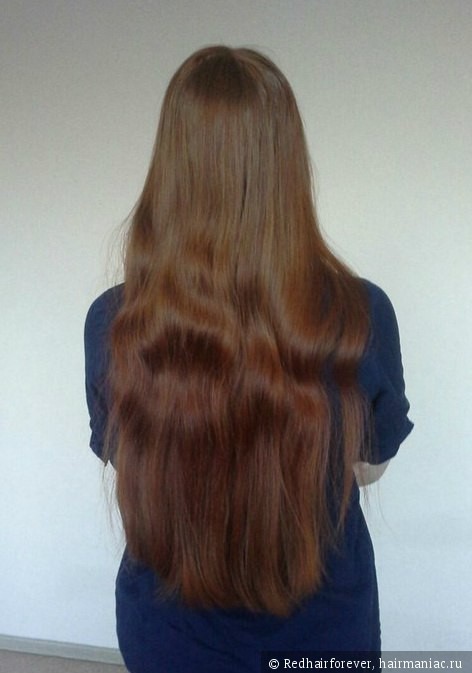
Looks good, it’s long, bright, and shiny. All of this was taken away from me over time by henna.

You might believe that everything is alright. Long, well, and red, so what’s the issue? In addition, no matter what I did, my hair actually started to dry out violently.
The truth is that there is still belief among some people that henna not only cures wounds but also doesn’t damage colored hair. This isn’t totally accurate, though.
My hair is not thin, not particularly Slavic (hey, I have Georgian roots!), not colored artificially, not damaged by anything (before henna), and I even didn’t use a hairdryer to dry them. After having had a few coloring treatments, I read about the terrible effects of henna, but I chose to ignore it because I thought I would get away with it. For a long time, I didn’t know why my hair kept getting worse.
How I used henna, how to use it at all
For those who may not know, henna in general is the dried and crushed leaves of the Lawsonia plant, it grows in hot countries, is used to decorate the body, and people used it to dye their hair red in Ancient Egypt.
I bought Iranian henna. Indian and Egyptian henna are also relatively common, but Iranian henna is more affordable in Russia. The price for it is quite low, you can buy it in bags at Auchan for a ridiculous price of about 15 rubles. I paid from 50 to 80 rubles for a large pack of 100 grams, if I’m not mistaken. If you order it online, it will be more expensive. But mostly still up to 500 rubles.
Did you know, by the way, that colorless henna does not exist? I simply twisted it by the temple when I first learned about this. However, that is accurate. What’s being sold as "colorless henna" is actually a powder made from a different plant. Consider Senna or Zizifus. All it takes to verify this is to peruse the product’s ingredients list. Hence, rather than being a counterpart to chemical paint staining, colorless henna is actually a herbal mask.
In general, pour powder into a glass bowl, pour a little cooler than a boiling water, wait 15 minutes, apply a hair dried, dried with a towel (washed only with shampoo, without using a balm), put on a polyethylene package/wrap it with a film, insulate a cap with a cap/towel , wait from thirty minutes to an hour and a half, wash off, apply balm, dry (Ahaha. Well, you understand?? Dried, like henna dries hair then. Okay, I"m sorry to me), We look at a miracle.
This is a classic recipe. And depending on what ingredients you add to henna, you can vary the shade a little and reduce the aggressive effect on the hair. For example, I brewed it with a decoction of onion peel or herbs (chamomile, nettle, and whatever I had at home), and added egg yolks to the gruel (never add the whites, it will curdle right on your hair, it will probably be terrible), olive/coconut oil, shikakai powder. You can also add something sour, like brewing it with kefir, or splashing a couple of tablespoons of lemon juice, 8-10 drops of lemon oil. Acidity enhances the effect of henna, the "redness" will be more pronounced.
It will be darker if you add cocoa, coffee, or basma. However, this is just theoretical. It will be challenging to later darken your hair if you regularly use henna to dye it red. I was unable to accomplish it until I applied a very small amount of henna to Basma. Even so, the darkness was only visible as a tint, which is actually rather unappealing. Furthermore. All of this can only be combined with a wooden or glass spoon due to the iron’s tendency to oxidize. I have only listed the brewing techniques that I have personally tried; there are many more; this is a platform for creativity.
As for the color, it is impossible to guess at all. There are too many initial data that affect the final result: hair structure, its condition, original color, type of henna itself, holding time, additional ingredients, number of previous henna dyeings, etc.etc.p. One thing I can say for sure, henna never gives a shade lighter than the original. And henna is only that which is 100% composed of henna leaves. This is not a “Henna-based paint” that promises you blond, caramel and other very precise colors that even paint cannot always give right away, without lightening. Henna is shades of red, period. Henna is a plant, without the addition of any chemical pigments – period. Everything else is henna-based paints. At best, high-quality. But now is not about them.
Well, what happened next
I"ll tell you right away, I liked the effect of henna on my hair. I liked the screaming red shade. It even seemed to me that henna made my hair better, and something else was to blame for the dryness. Because immediately after dyeing, the hair seems denser, it is smoother, thicker, shines like crazy. Well, and again, I was deceiving myself, because I understood that after so many dyeings, the only thing left to do is cut the hair, because you can"t just pull henna out of your hair, like paint with a wash, for example.
But the hair began to dry. Dry. Dry. I am writing this several times so that you roughly understand that, damn, they began to DRY. Despite the fact that I: did not use any thermal styling stuff, braided it and hid it in a hood from the cold, washed it only in warm water, always used balms/masks after washing, regularly applied warm oil (oil helps my hair, that"s a fact), used only the right elastic bands, combed my hair with a tangle teaser, applied leave-in products, trimmed the ends in a timely manner (including along the entire length, to do this, I bought hairdressing scissors) and even slept in a silk cap! And I treated my hair very carefully, like some expensive yarn. I always put it away in public transport, when doing sports, during rain and wind. I carefully divided it into two parts and laid it on myself in front instead of sitting on a chair and pressing it against the back. In short, I was very, very, very gentle with it, but I got this.
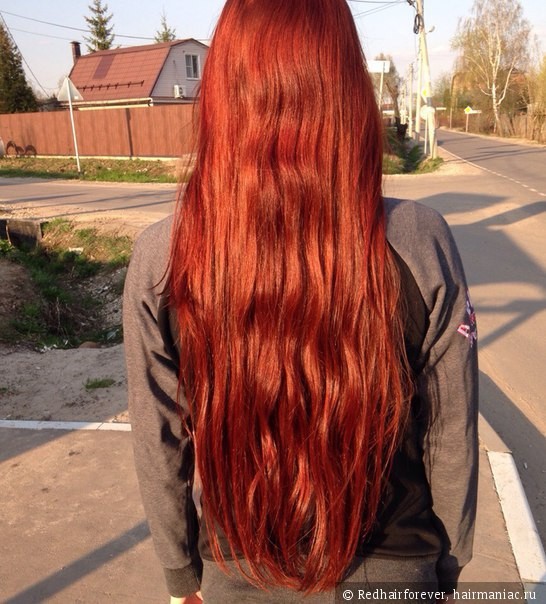
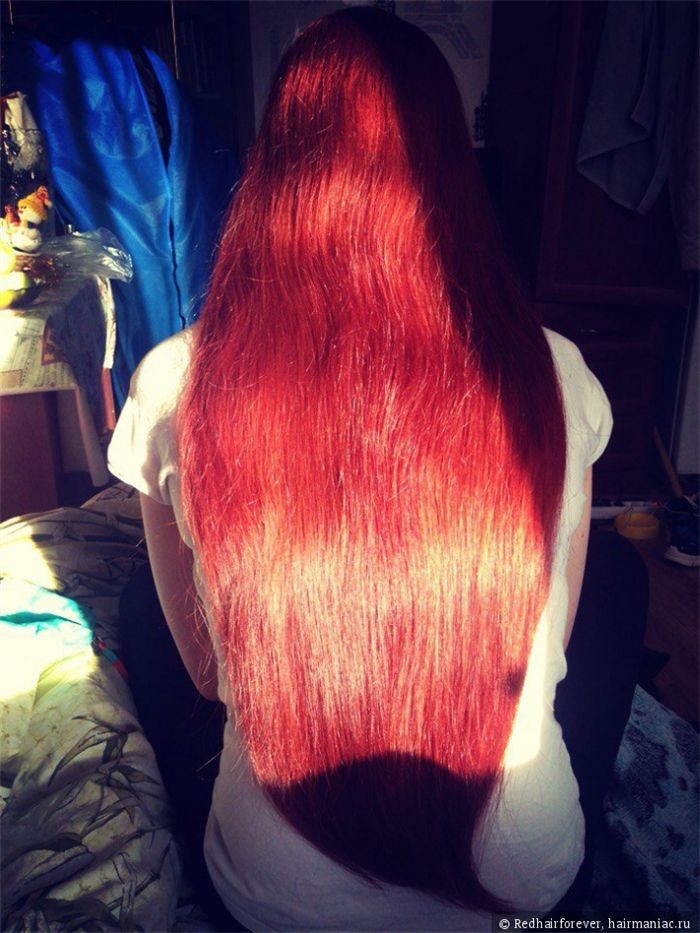

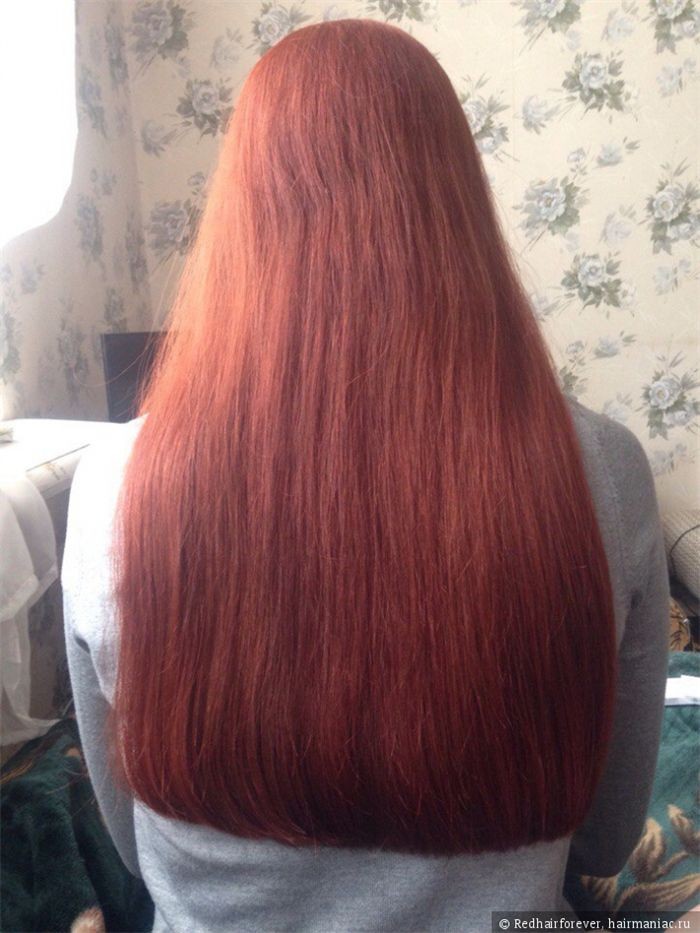
Finally, I managed to get this.
Then I made the decision to stop using henna to dye my hair, and I did. I kept taking the same care of my hair, growing out the color in the hopes that it would eventually fade and blend in with my natural color, but that didn’t happen.
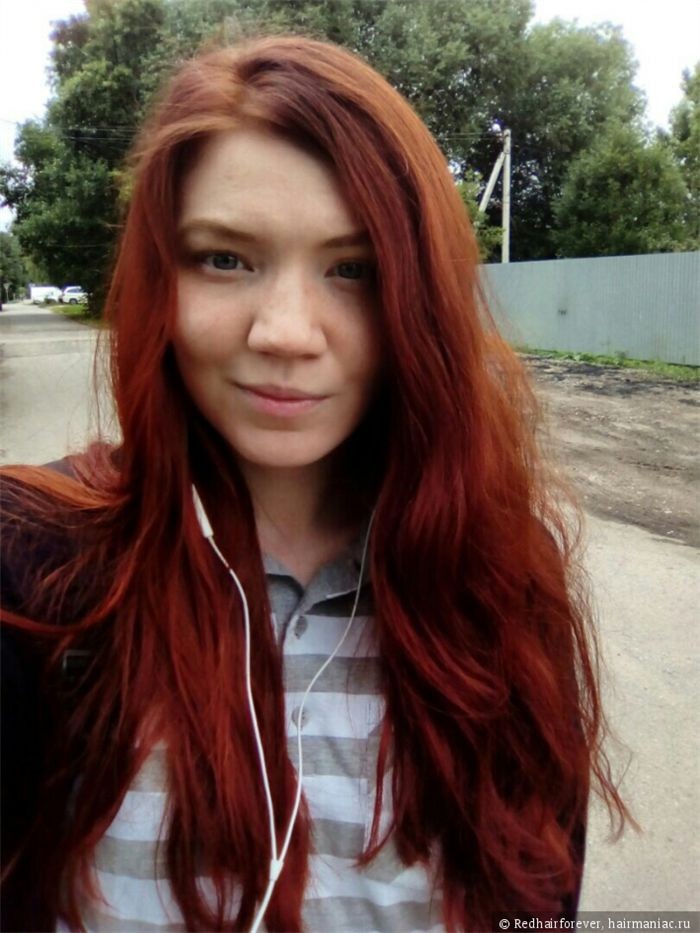
My hair could not possibly grow after I stopped using henna. Because it was no longer covered in pigment and no longer had the "goodies" of increased thickness and shine, it started to dry out even more. I decided to cut my hair into a bob instead of growing and cutting henna for years, which would have required me to grow my color.

To be honest, I didn’t regret it. This factor was also very important to me. The variety was good, and maintaining a bob is easier. I completely removed the henna from my bob after a year of wear, and I’m growing my hair out from scratch without using henna dye this time.
So why is henna harmful
I thought about this for a long time. The fact is that, unlike chemical dye, the henna pigment has a rather large structure, cannot be built into the cortex and remains on the surface, tightly eating into the cuticle. It works on the principle of cement, which we smear hair with. Plus, from my personal observations, applying herbal gruels to hair, in principle, almost always dries it out. And also, henna, even finely ground, ground anyway. It consists of scrubbing particles, and this is detrimental to hair, because it leads to damage to the cuticle, causing split ends. If the hair is dry and porous to begin with, then henna kills it almost immediately. If healthy and without any problems, like mine, then it kills them in the long term. But it still kills.
Furthermore, a respectable salon will probably decline to color your hair with regular dye after henna application. Since henna remains in the hair structure even when it is not visible, coloring your hair with it can have unpredictable results, particularly when it comes to lightening. Henna can only be taken out of your hair by cutting it. I attempted to use chemical dye to dye my henna hair, but all I could get was the appearance of an ugly tint.
| Reason | Description |
| Color Disaster | Henna didn"t give the expected color, leaving hair with an unpleasant tint that was hard to correct. |
| Hair Damage | The natural dye dried out the hair, causing severe breakage and making it unmanageable. |
| Stubborn Stains | Henna stained everything—towels, skin, and even clothes—making the whole process frustrating. |
| Inconsistent Results | The color came out uneven, with some parts darker than others, leading to a patchy look. |
I didn’t make the decision to cut my hair after applying henna lightly. Although I cherished my long hair, there was no denying the damage the dye had done. Even with the best of intentions, things don’t always go as expected, so knowing when to start over is crucial.
Henna isn’t for everyone, even though it works well for some. I’ve learned from experience that knowing what’s best for your hair is a personal decision, and what suits one person may not suit another. Sometimes getting a haircut is the only way to start over and fix the damage.
Cutting my hair was liberating in the end. It enabled me to put the hurt behind me and concentrate on my well-being. Don’t be afraid to make the change if you find yourself in a similar circumstance. Hair regrows, and sometimes a fresh start is just what’s required.


