
Extravagance and grandeur characterized the Baroque era, and women’s hairstyles were no different. These hairstyles, which were renowned for their ornate and towering designs, served as status, wealth, and artistic symbols. The women of that era created dazzling and sumptuous looks by accessorizing their hair with curls, waves, and ornamental pieces.
Even though baroque hairstyles may not seem like they belong in today’s world, their influence is still evident. The elegance and drama of the era serve as a source of inspiration for designers and hairstylists, who create modern twists on the traditional look. These hairstyles never fail to turn heads, whether they’re worn for special occasions or fashion shows.
We’ll examine the essential components of baroque hairstyles and their development in this post. You’ll find both contemporary and historical interpretations, providing you with a wealth of inspiration to create your own Baroque-inspired style.
- History and description of the style
- Characteristic features of styling
- Relevance today
- Recommendations for execution
- Modern options
- Styling with side strands
- Hairstyle with loose curls
- French bun
- Ponytail with a backcomb
- Fontange-style styling
- Pros and cons
- Star examples
- Video on the topic
- Maria Antoinette"s hairstyle lesson #60 Marie Antoinette Hair
- Baroque hairstyle. Tatiana Melikhova
- 3 hairstyles in the Edwardian style
- HAIRSTYLES: History, Styles, Trends
History and description of the style
You should at least once watch and listen to a classical opera in order to fully comprehend what Baroque is. Everything in it, including the scenery, hairstyles, and costumes, is a holdover from the Baroque era. This is not surprising, given that the European theater flourished most vigorously during that historical period.
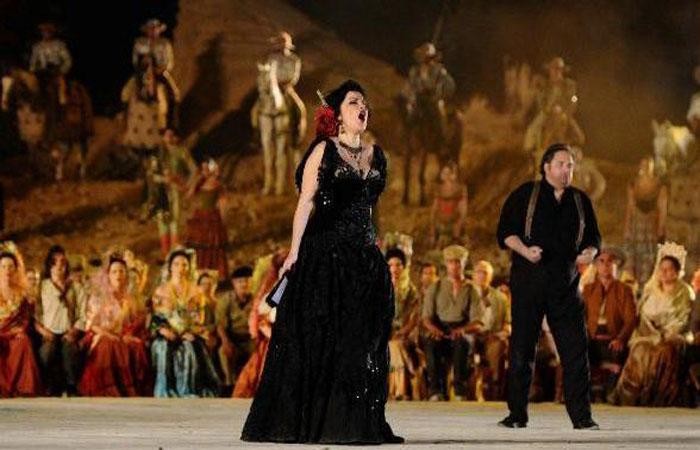
Opera, cantata, and oratorio were the three most popular musical genres. Vibrant color and energy were prominent in the visual arts (see, for instance, paintings by Rembrandt and Rubens).
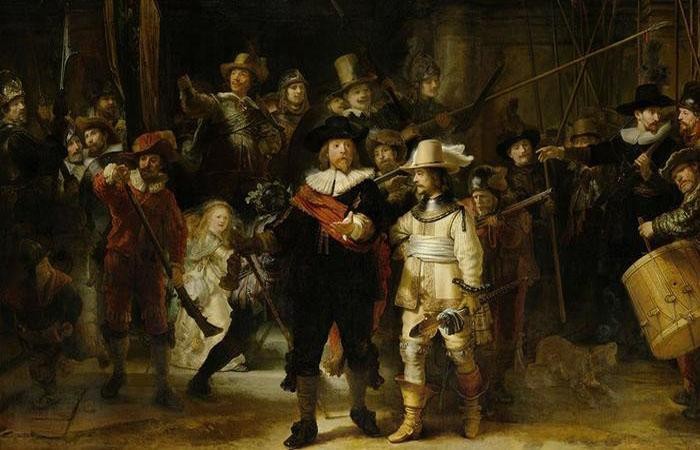
The style was heavily reliant on sculptures. Scale and scope were acquired by architectural structures. Their intricate forms, which are typically curved, are another characteristic. Versailles, Peterhof, and other Baroque ensembles are the biggest and most well-known.
Gradually, the people of that era abandoned their preconceived notions, furnished their homes in an ostentatious manner, and devoted their leisure time to attending masquerade balls, playing cards, going to the theater, or strolling along the promenade.

Baroque, which emerged at the end of the 16th century, took the place of Classicism and Renaissance, two styles known for their perfect symmetry, harmony, and proportions. The Portuguese word "barroco," which translates to "irregularly shaped pearl," was given a "speaking" to reflect the dissatisfaction of Europeans with dull and proper uniformity. While there are other ways to interpret the term, this is the most common one.
"Strange," "vulgar"—as soon as Italy stopped calling anything Baroque. However, the course there evolved over the course of the 17th century, just like in some other European nations. Louis XIV’s reign in France was the height of the "wrong" style.

The "sun king’s" absolute monarchy will also come to symbolize the times: total, unrestricted power and the same level of luxury in everything. It’s no accident that one of the queen’s favorites was rumored to be dressed in "gold on gold."
A whalebone corset was a common feature of women’s clothing at the period. It did more than just slim the waist—it opened the neckline to the maximum extent possible, reaching a maximum of 33 cm, as seen under Catherine de Medici at the close of the 16th century. Exquisite gowns with lots of volume comprised multiple skirts. The upper dark one had to let the lower light one peek out from underneath. A train was an essential component of a Baroque woman’s costume, as were draperies, ribbons, lacing, and embroidery.

Court men wore garish clothing just as much as women did, including knee-length skirts, tight stockings, lace shirts, caftans with jabots, etc. Shoes had buckles and bows on them. Since the king himself wore heels, they became fashionable, and as a result, both men’s and women’s clothing included this particular detail. A posh appearance also included items like fans, muffs, gloves, jewelry with big jewels, a collar-mill, and umbrellas.

Clothes were made of velvet, satin, brocade, moire, and other materials. Mostly red, black, gold, purple, green, etc. make up the color scheme.

Throughout the Baroque era, makeup received a great deal of time and attention. The skin needed to stay extremely pale. It was severely powdered and shielded from the sun for this. Women wore special face masks when they went outside, which they frequently held in place with their teeth. Red lips were painted on.

Take note! The image’s focal point was a beauty spot that mimicked a décolleté mole on the face. It was constructed from a piece of taffeta, plaster, or black velvet that was adhered precisely.
If a woman wore a headpiece during the Baroque era, it might have been a cap or a thin kerchief. The men had wide fields on their tall hats. They gave way to cocked hats by the end of the 17th century, which went on to become fashionable. The hats had to be held in their hands, even though the very tall, voluptuous, lavishly decorated hairstyles themselves were exquisite headdresses.

Characteristic features of styling
Men and women alike peered behind their hair’s presentable appearance. Both frequently wore large, lofty, heavily powdered wigs. The court ladies and gentlemen had special sticks in this case because the people’s heads itched, and this could stop the itching in the hair. Occasionally, midges and even tiny rodents were started in exquisite wigs, which were presumably thought to be stylish features with cozy minks and nests.

At first, there was a connection to the male baroque haircut trend. wearing collars. Tabor had short hair at first, but it didn’t stop her from wearing a collar-fraise, which is a thick, broad, and powerfully stolen white "ring" that is worn snugly next to the neck. Men started growing out and curling their hair in the 1700s. subtle bangs and pigtails. A folk collar became popular in apparel.
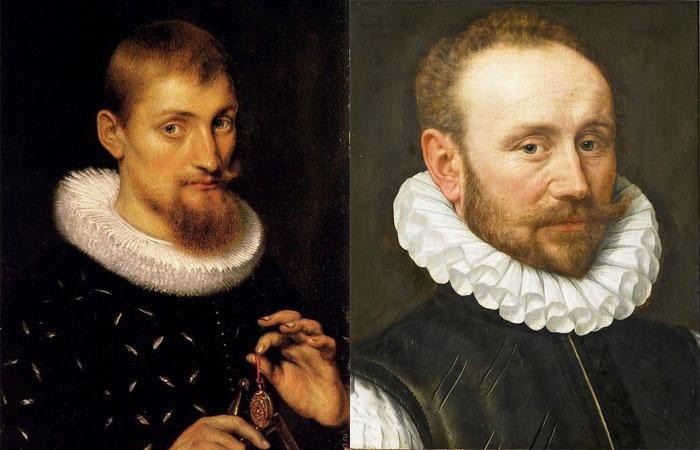
The piled hair had bows and jewelry on it. Subsequently, the trend persisted during Louis XIV’s reign; however, natural curls began to replace artificial ones during this time. History tells us that the "king-sun," who had gone bald by then, is credited with starting the wig trend. Unnaturally curly hair that flew was secured with a thin mesh-covered hat. Additionally, men shaved their faces clean during the Baroque era and accessorized their appearance with a wedge-shaped beard and a "Chevalier" mustache, which had narrow stripes with twisted tips.
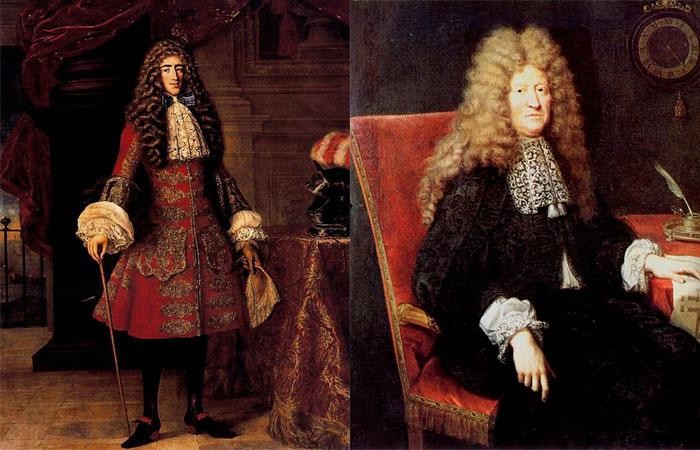
Furthermore. Wigs with blonde hair were particularly well-liked. Members of the royal family had the privilege of using them for a while. The artificial hair of other shades was heavily powdered, or lightened, for the same reason. By the 1770s, brown wigs had taken the place of blonde wigs.
Although women also wore false hair, it was typically in the form of individual strands that gave the hairstyle more length and volume. Women fashioned gorgeous curls that cascaded down their shoulders and backs, copying the style of men. Several prominent female styles emerged during the Baroque period and gradually supplanted one another. The principal one is:
- "Al-Anthan" (which means "childish") – curled hair tied with a tape around the head;
- "Garcett" – hairstyle with curls on the forehead and on temples;
- "Fireworks" – smoothly laid front strands passed into a voluminous bundle from behind, and curls in the form of a corkscrew were descended on the sides. The wife of Louis XIII, Anna Austrian, the queen of France and the mother of Louis XIV, introduced the hairstyle in fashion;
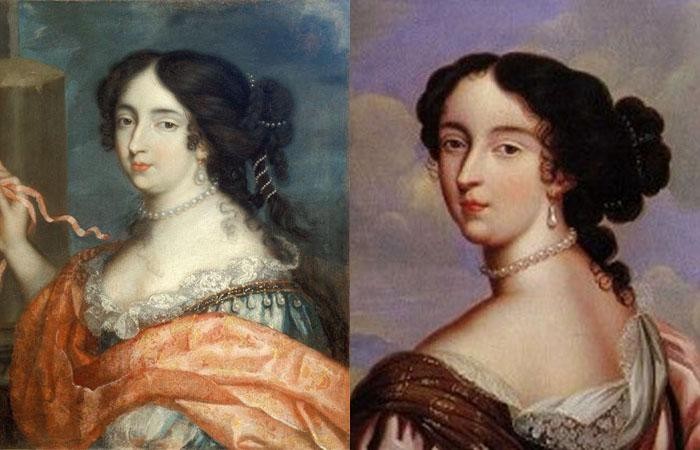
- "Maria Manchini" -That was the name of one of the favorites of the Sun King, after which women began to curl their hair with small curls and lay them on both sides of the face in the form of two hemispheres;
- "Jurlu-Burn" — a hairstyle similar to the Maria Mancini style: the curls were styled in symmetrical rows along the center parting and decorated with ribbons. A couple of curls were left on the shoulders;
- "Sevigne" – curled hair was used to form buns around the head.

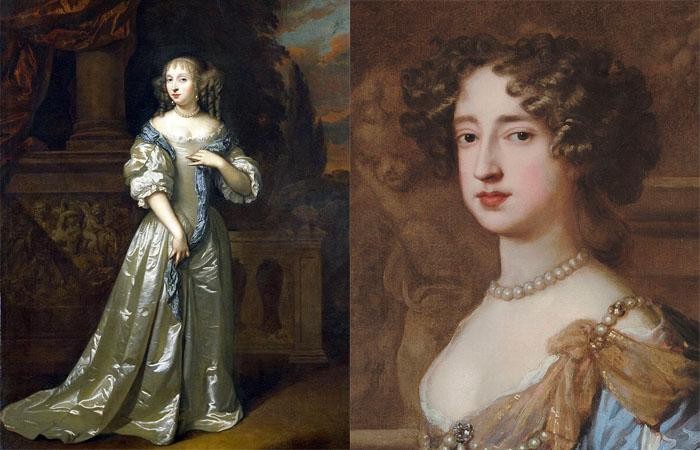
Women’s hairstyles frequently featured wire frames and rose several tens of centimeters above the crown. Such piles, in their majesty and pretentiousness, were reminiscent of men’s baroque wigs. The "Fontange" hairstyle is thought to have been the inspiration behind the popular high hairstyles. Its past is fascinating.

Louis XIV had Marie-Angelique de Fontanges as his favorite. She once had unkempt hair during a royal hunt. With a little creativity, the woman pulled her hair up into a high bun and secured it with a stocking garter decorated with jewelry (some reports say it was lace from a sleeve). Since the king recognized his beloved’s resourcefulness, many courtesans have adopted high hairstyles.
Furthermore. Another type of headgear was the "fontange," or cap.
Towards the end of Louis XIV’s reign, women started wearing more subdued hairstyles. In particular, the "Humility Knot" gained popularity. Hair that had been styled smoothly was pulled into a low bun. The "Sun King’s" final love, the Marquise de Maintenon, started the trend. Over the course of the eighteenth century, the Baroque style lost favor. It was replaced by a different style known as "Rococo," which is regarded as the pinnacle of Baroque aesthetic development or even a continuation of it.
Furthermore. One characteristic of both looks is their high hairstyles. Observing the portraits of Queen Marie Antoinette suffices. Her personal hairstylist even devised a folding system for her, as having perfectly styled hair was inconvenient for walks under low arches, carriage rides, etc.
Relevance today
Baroque hairstyles are extremely ostentatious and have lost some of their original appeal. Different-lengthed modern girls prefer styling that is natural, dynamic, and not overly complicated. Only very special occasions are suitable for baroque style. For instance, at a wedding. Such choices work well for a themed photo shoot or costume party.

Court ladies’ actual ages were frequently extended by several years by elaborate hairstyles. Young women must use extreme caution when creating such hairstyles. A well-chosen outfit and accessories will add effectively to the Baroque look. Opt for a neutral appearance instead of the traditional 17th-century makeup, which included a whitened face and could visually age the wearer.
The oval face shape can work against you when trying to create a Baroque hairstyle. After all, not every woman looks good with her hair lavishly styled and forehead open. Owners of faces that are square, rectangular, or elongated, for instance, should refrain from doing this. The length of the hair affects the hairstyle as well. Use a chignon if the strands are not very long.
Recommendations for execution
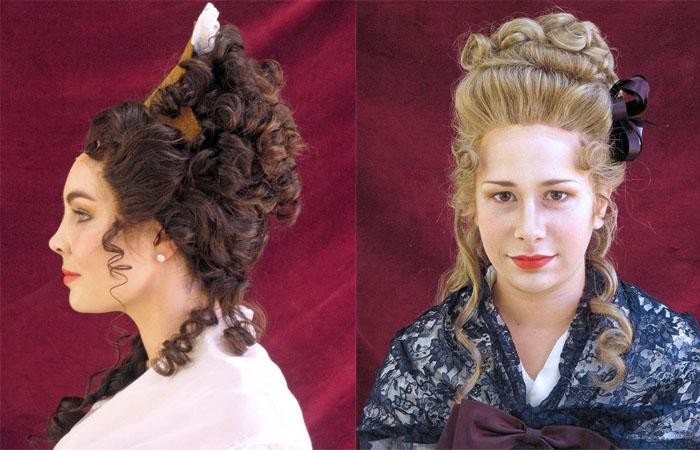
You will need to see a highly skilled master in order to fully replicate a Baroque hairstyle. You can create a similar, albeit far simpler, styling at home. Fundamental nuances:
- Hair or part will have to be combed to get an additional volume that is so necessary for a hairstyle in the spirit of Baroque.
- If there is a bang, remove it using hairpins, styling, decorative accessories.
- Curls desirable to make vertical. Take a spiral or conical curling iron with a diameter of 1.9–2.4 cm. Iron, curlers will not fully cope with the task. Leave them for another hairstyle.
- Styling products will help to lay hair. Take foam or mousse, varnish.
- Also prepare hairpins, invisibility, scallop with frequent cloves and a long handle (for combing and allocation of strands).
- Choose accessories for hair decoration. These can be lace ribbons, hairpins with stones, etc. d.
Advice: Use a few mirrors when doing your own baroque hairstyles. The back of the hairstyle should be just as tidy as the front.
Modern options
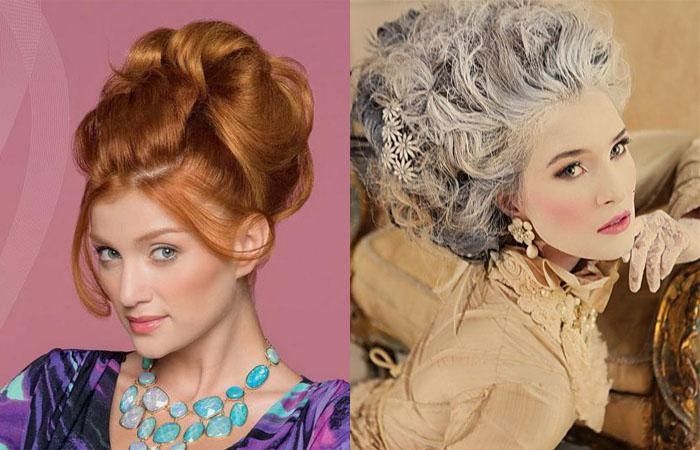
Not a straight copy, but a stylization of baroque hairstyles – a middle ground for women who want to add luscious, well-manicured curls to their appearance without appearing dowdy. To prevent this, try not to incorporate too many of the baroque style’s hallmarks into your hairstyle at once, such as an open forehead, a bouffant on the crown, vertical curls, released sides, and an abundance of decorations.
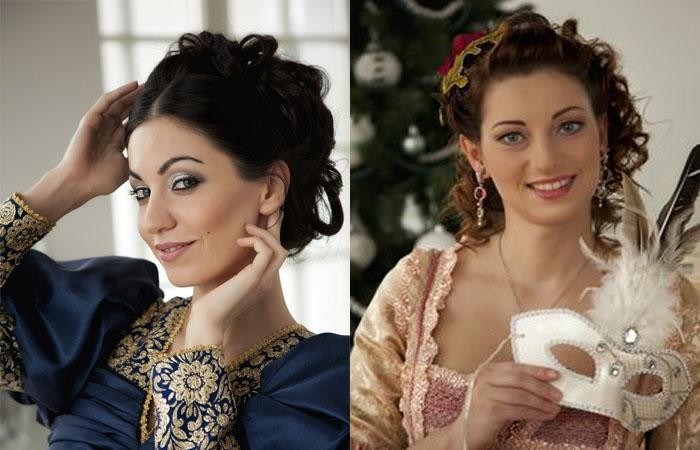
"Babette" and French buns, or their equivalents, are examples of restraint options that might be very appropriate. A tiny braid can be used to balance out the high styling instead of side strands.

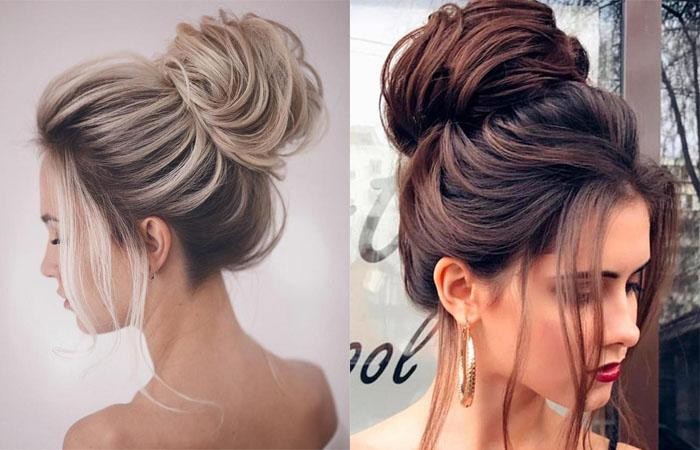
Styling with side strands
Methodical hairstyle:
- Comb your hair.
- Separate a small strand from both sides of the face. Temporarily fix them.
- Backcomb the rest of the hair. Use a fine-tooth comb and hairspray to fix the result.
- Carefully make a high ponytail from the backcombed hair.
- Wrap it around the base (elastic band), secure with hairpins.
- Slightly fluff up the resulting bun of hair.
- Use a curling iron to curl the strands that were left at the very beginning.
- If necessary, additionally fix the hairstyle with hairspray, decorate with accessories.
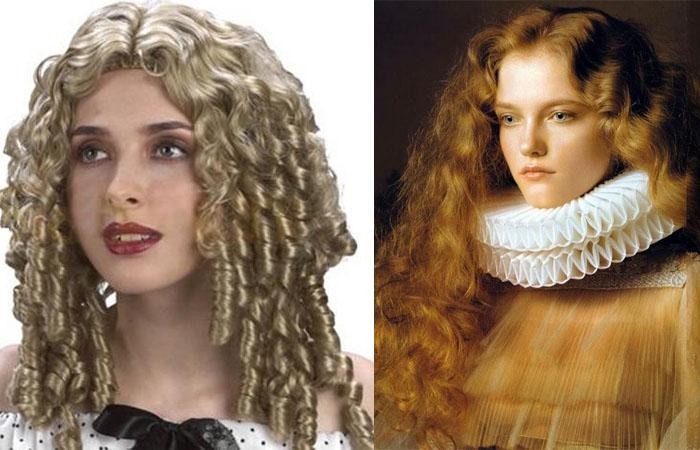
Hairstyle with loose curls
Ideal for people with opulent but short hair. An algorithm for creating a baroque hairstyle:
- Wash and lightly dry your hair or slightly moisten clean strands.
- Distribute foam or mousse through your hair.
- Divide into strands, curl each with a curling iron or curlers. Remember: the curls should turn out vertical, flowing.
- Use your fingers to gently separate the curls to add volume.
- Lift the hair at the temples, pin them with invisible pins.
French bun
The method is comparable to the "Fontange" hairstyle, but all you have to do is comb through your hair liberally rather than twisting it. Specific guidelines:
- Comb your entire head of hair. Divide it into 2 parts with a horizontal parting from ear to ear. Remove the top hair for a while so it doesn"t get in the way. Use a clip or elastic band.
- Carefully comb the bottom strands from all sides. After that, treat your hair with hairspray so that it holds its shape well.
- Without losing volume, gather the combed part of your hair into a roller or bun. Gently press your hair with your hands. Hide the ends of the strands inside, fix the first element of the future baroque hairstyle with invisible hairpins or hairpins.
- Proceed to combing the top part of your hair. Do this strand by strand. Important detail: comb only the back of each curl so that the front part remains smooth.
- After combing each curl, place it on a roller. The ends of all the hair should converge in one place. Attach the strands with hairpins, invisible hairpins, hide the protruding edges.
- Treat the styled hair with hairspray, and then with a hairdryer, selecting the cold blowing function.
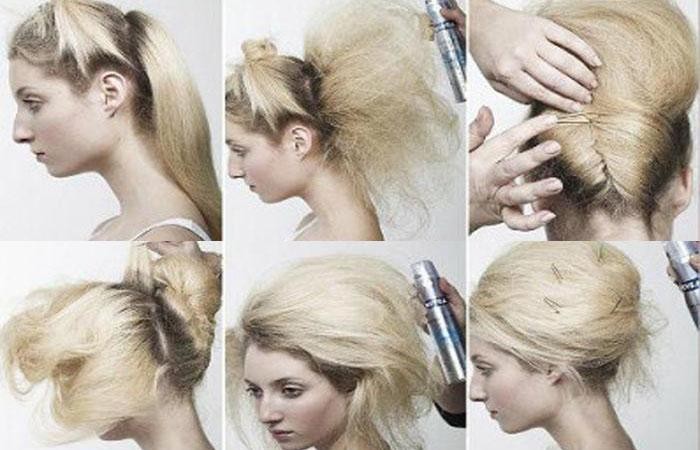
Suggestions. If preferred, add decorative elements or curl side strands to accentuate the hairstyle.
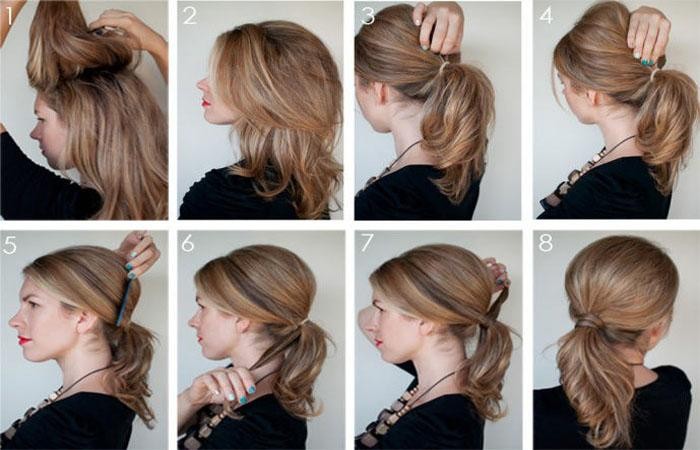
Ponytail with a backcomb
One of the easiest ways to style the Baroque look, where the backcombing is the only element reminiscent of the hairstyles from that era. Those with long hair will look good in this hairstyle:
- Comb your hair.
- Separate the side and top strands and backcomb them. Treat only the inner part of the hair, since the outer part should remain smooth. In the language of hairdressers, this procedure is called backcombing. Backcomb about a third of each curl in this way.
- Carefully collect the backcombed hair and secure it just below the crown, using invisible hairpins (fix them (criss-cross). You should get a voluminous "cap" – the top element of the hairstyle.
- Gather the rest of the hair at the place where the hairpins are attached, form a ponytail.
- Separate one strand, wrap it around the elastic band and simultaneously hide the invisible hairpins.
- Twist the ponytail to get spiral curls. Put them on one side. If desired, decorate with a ribbon laid along the voluminous crown.
We advise you to read our website’s instructions on how to properly execute a bouffant.

Fontange-style styling
One of the most common hairstyles during the Baroque era appears pretentious and outdated in its original form. If you have long, thick hair, go for a contemporary take on this look. You won’t have to wear a wire frame around your head, but you will still need to adhere to the Baroque aesthetic. Women who have thin, sparse hair should buy lots of fake hair.
Guidelines for creating the hairstyle:
- Comb your hair and divide it into 3-4 layers with horizontal partings.
- Temporarily remove the top parts with hairpins.
- Treat the lower strands with mousse, and use a curling iron to turn them into wide vertical curls. Curl your hair from the roots, holding the tool parallel to the floor. Carefully remove the finished curls from the curling iron and secure with hairpins, waiting for the “spirals” to cool.
- Curl the rest of your hair in the same way. Leave only 2 side strands at the temples to effectively style your hair at the end.
- Gently comb the curls, turning them into a single wavy mass. Spray lightly with styling spray.
- In the same way, comb the strands in layers: the main mass completely, and the hair along the growth line – only from the outside, so that the hairstyle turns out smooth.
- Gather about a third of your hair on the top of your head in a high ponytail. Put 2-3 “donuts” on it, designed to form buns. You should get a pyramid. Ends lower the strands down and distribute them into “donuts”. Try to ensure that the base of the future hairstyle in the Baroque style does not lose its splendor. Secure the "tower" structure with hairpins and hairspray.
- Take care of the curls on the back of the head. Carefully smooth them from the outside, keeping the main backcombing. Put this part of the hair on the "tower", pin them with invisible pins.
- Do the same with the strands at the temples.
- Move to the front part of the curls. If necessary, backcomb them again, but only from the inside, and lay them on the base of the hairstyle, completely covering the structure with "donuts".
- Draw the ends of the strands in the form of flirty curls. If necessary, additionally use gel or wax for this purpose.
- Treat the hairstyle with hairspray. Twist the side curls that were left at the beginning and lay them on the chest.
Pros and cons
Benefits of historical hairstyles:
- have a luxurious, presentable appearance;
- make it possible to use false hair if your own hair is not thick or long enough;
- Elegant thematic decor makes the styling especially festive;
- with such a hairstyle you will be able to feel like the queen of the evening.
The drawbacks of styling
- does not suit all women;
- difficult to do at home;
- require a lot of time;
- have a limited range of application – mainly hairstyles are done for weddings, themed photo shoots.
Star examples
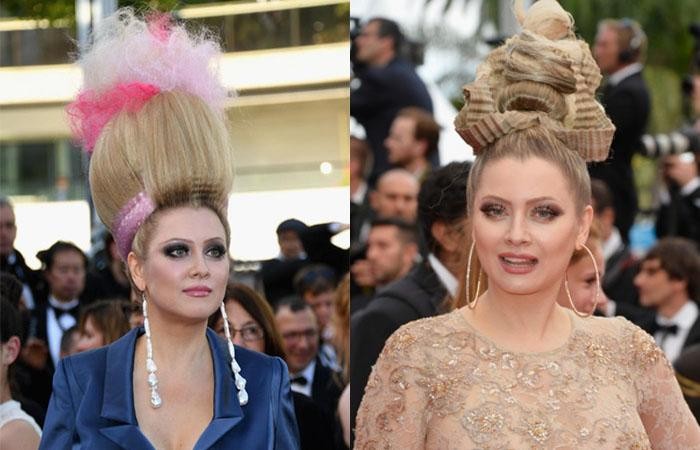
Rarely do outrageous celebrities wear Baroque-inspired hairstyles again for a night out. For instance, the brilliant and remarkable Lady Gaga dressed exclusively in a gown made in accordance with the customs of opulence and grandeur, and she carefully styled her hair.

Lena Lenina was the most stylistically similar to the Baroque era. The author is renowned for her oddball, startling fashion sense. Nearly all of them are capable of competing with the ostentatious Baroque hairstyles.
Only historical costume films will feature Western and domestic celebrities wearing the distinctive Baroque styling. Take D’Artagnan and his musketeer companions, for instance. Alisa Freundlich portrayed the French Queen Anne of Austria in the 1978 film, and Maria Mironova played the role in the 2013 television series.

The Baroque era is also reflected in the film "The Duchess", in which the main role was played by Keira Knightley.
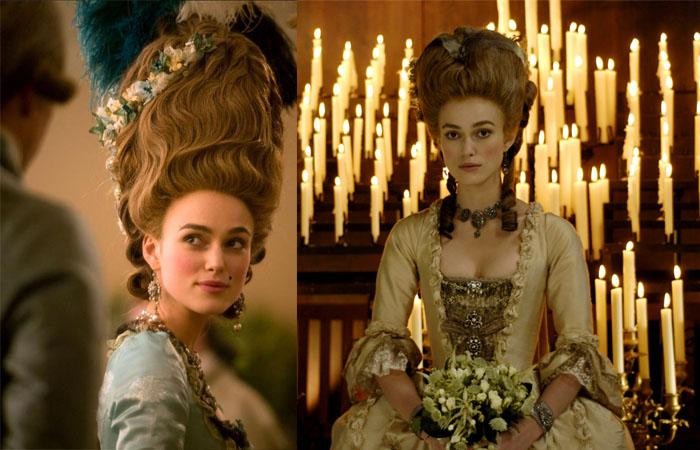
The opulent, macabre, and theatrical style has not vanished completely; examples of it in apparel include "noble" velvet and brocade, voluminous skirts and dresses with puffy sleeves, lace, frills, and bows, among other details.
In terms of hairstyles: high-laid curls, femininity, and extra volume. To achieve a sophisticated and sophisticated look for your celebration, you must be able to accurately interpret and embody the Baroque heritage.
- nuances in choosing a parting on the head, popular varieties;
- what is cold hair styling, features and technologies of execution;
- the order of hair styling with hairspray;
- how to properly style your hair with a hairdryer;
- How to make collected hairstyles for different hair lengths;
- how to make hair voluminous;
- how to beautifully weave a ribbon into a braid.
| Historical Baroque Hairstyles | Modern Baroque-Inspired Hairstyles |
| Elaborate updos with curls and wigs, often adorned with pearls and feathers | Elegant updos with loose curls and modern accessories like pins and subtle jewels |
| High, voluminous styles with complex layers and powdered hair | Volume-focused hairstyles with softer curls, sometimes adding braids for a romantic touch |
| Intricate hairstyles with layers of ribbons and lace | Simplified versions using headbands or decorative hairpieces for a more casual look |
Baroque hairstyles continue to influence contemporary fashion and have a lasting impact on the industry. The grandeur and elegance of the time are captured in their elaborate designs and voluminous forms.
Baroque hairstyle elements are being creatively reimagined in many ways nowadays. These historical influences are still relevant today, whether they are incorporated into understated formal updos or dramatic, ostentatious looks for special occasions.
Modern takes on Baroque hairstyles provide a distinctive way to stand out while appreciating the beauty of the past for those looking for a hint of drama and sophistication.
During the 17th and 18th centuries, women’s hairstyles in the Baroque style are renowned for their intricate, voluminous designs, which stood for power and luxury. These hairstyles have a history of having curls, waves, and tall buildings decorated with ribbons and pearls. With softer waves, elaborate braids, and exquisite accessories, today’s modern takes on Baroque hairstyles offer a more wearable approach and create a timeless yet updated look that combines historical details with modern fashion.


