
Prince Philip, Duke of Edinburgh, was a man whose image was most often seen two steps behind Queen Elizabeth II. To the world, he was the monarch's loyal companion, the epitome of duty. But behind this impeccable facade lay a much more complex and vibrant personality.
In his private life, Philip was the complete opposite of the prim courtier. He was famous for his sharp, often sarcastic sense of humor, which could either defuse a situation or make people feel uncomfortable. His straightforwardness and intolerance for pomp were legendary.
He lived in unique circumstances: as the head of the family, he always remained in the shadow of his wife, the queen. This required incredible self-sacrifice and strength of character. Behind the scenes, he was Elizabeth II's support and advisor, someone she could trust unconditionally.
His personality is a story of how to combine one's own vibrant individuality with a life completely devoted to service. Behind the scenes, Prince Philip is a man who always followed his own path, but never strayed from the path of duty.
Philip had a difficult childhood
The future Duke of Edinburgh was born on June 10, 1921, to Prince Andrew of Greece and Denmark and Princess Alice of Battenberg, niece of Russian Tsarina Alexandra Feodorovna. Prince Philip's early years were full of upheaval. “Queen Elizabeth's family was very stable and close-knit, while Philip's parents fled Greece with him and his four sisters,” said royal expert Caroline Harris. “When Philip was nine, his mother was admitted to a psychiatric hospital in Switzerland, and his father left with his mistress. Their only son was sent to a boarding school in Scotland, and during the holidays he was passed from relative to relative.”
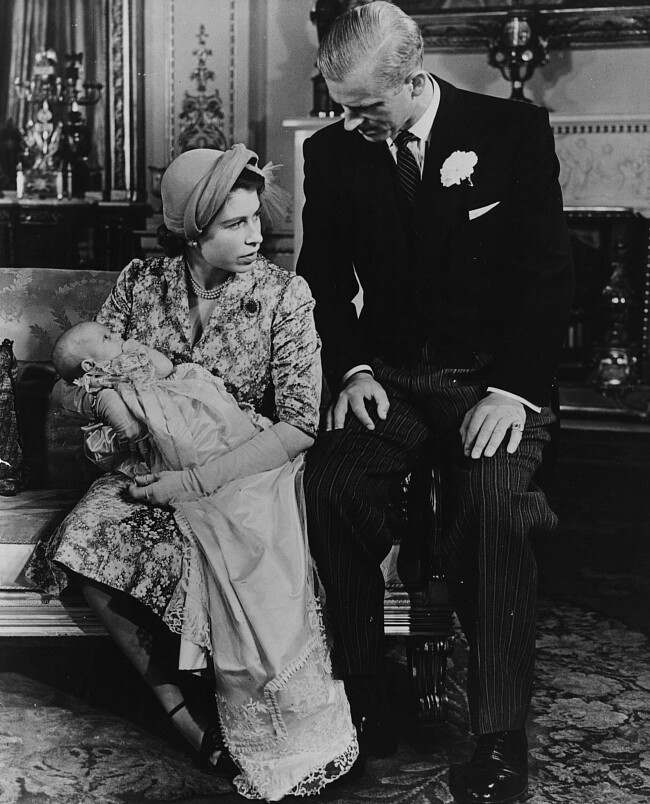 Prince Philip and Elizabeth II with newborn Princess Anne, 1950
The prince struggled to fit into the royal family
Coming from an impoverished royal family, he was not considered an enviable suitor in Great Britain. His future in-laws considered the chosen one of their eldest daughter, then Princess Elizabeth, to be uncouth and too harsh — despite his education at elite institutions in Germany, Scotland, and Great Britain. It took George VI six months to approve the union between Philip and Elizabeth; rumour has it that he was stalling for time, hoping that his daughter would change her mind. The king's doubts proved to be partly justified. “Philip could be compared to a hot-headed young deer at the time. As soon as he found himself in the orbit of the terrible royal court with all these lackeys telling him what to do, he realized that this life was not for him,” said Clive Irving, biographer of the Duke of Edinburgh. “It's no surprise that he broke away and went sailing for six months. Philip wanted to escape the oppressive atmosphere of the palace, where he felt constrained.”
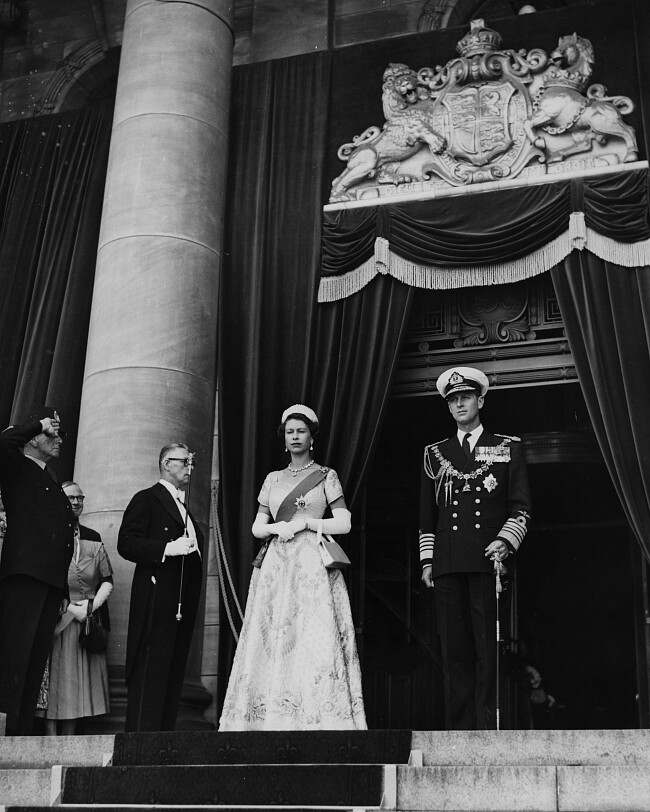 Elizabeth II and Prince Philip during the royal tour, 1954
Profession: Husband: 5 Facts About Prince Philip Read
Philip set a precedent for prince consorts
When Prince Philip proposed to Princess Elizabeth, he could not have imagined that she would soon change her title and take the royal throne. Becoming prince consort, Philip was forced to rethink all his career plans and redefine his place in life. “Philip didn't have many role models, because there weren't many queens at the time. He had to find his own role in the royal family,” said the Duke of Edinburgh's biographer. “In addition to patronizing more than 800 different charities, Philip took on the management of the Queen's personal property and a leadership role in the family. Among other things, he decided how their children — Prince Charles, Prince Andrew, Prince Edward, and Princess Anne — would be educated.”
 Prince Philip at polo practice, 1952
Behind the scenes of royal life, Prince Philip was far from being just a strict spouse to the Queen—he turned out to be a man with a sense of humor, straightforward manners, and unexpected simplicity. He knew how to put an official in his place with a short, sharp joke, loved spending time with his grandchildren, enjoyed racing, and got behind the wheel himself, despite his title. Philip valued order, hard work, and straightforwardness, often saying what he thought, even if it sounded rude. He was a pillar of strength for his family and, for the British people, a figure who, albeit with sharp edges, kept a quiet but firm hand on the throne for decades.
He always looked to the future
Prince Philip was ahead of his time in many ways and advocated for the comprehensive modernization of the monarchy. It was he who insisted on broadcasting the coronation of Elizabeth II, which not only brought the royal family closer to their subjects but also contributed to the development of the television industry. “Many people bought their first television just to watch the ceremony,” said royal biographer Clive Irving. Even as he approached his 100th birthday, Philip still had a preference for technology. In 2017, he visited Vantage Power, a company that develops engines for hybrid buses, and reminded employees that he had driven one of the first electric cars in the 1960s.
Philip's rebellious statements have repeatedly jeopardized the palace's reputation.
While Queen Elizabeth II always tried to stay above politics and was very careful in her statements, Prince Philip often allowed himself to be overly frank and caustically ironic. One of his most scandalous remarks was made during a visit to China in 1986, when he said to a British student: “If you stay here long enough, you'll come home with slanted eyes.” “When he was younger, his words were often the subject of discussion,” Philip's biographer shared. “By his nineties, people became more forgiving of him.” When the Duke of Edinburgh met with activist Malala Yousafzai in 2013 to discuss the importance of education, he joked that in the UK, “people want children to go to school to get them out of the house.” Yousafzai responded with a polite laugh.
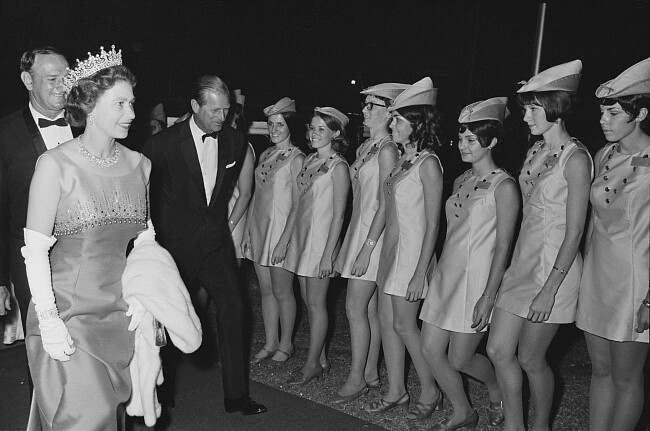 Elizabeth II and Prince Philip during their visit to Australia, 1970
The love story of Elizabeth II and Prince Philip Read
The prince's outlet was polo
While many people know that Queen Elizabeth II loves corgis, her husband's hobbies have rarely been of interest. From a young age, the Duke of Edinburgh had a particular passion for sports. During his school years in Scotland, he was captain of the cricket and hockey teams. After moving to Buckingham Palace, he became fascinated with polo and even formed several teams in London. However, in 1971, Philip had to give up his hobby due to arthritis. Horse riding was replaced by driving a horse-drawn carriage. The prince mastered his new passion and regularly performed at the Royal Windsor Horse Show until almost the end of his life.
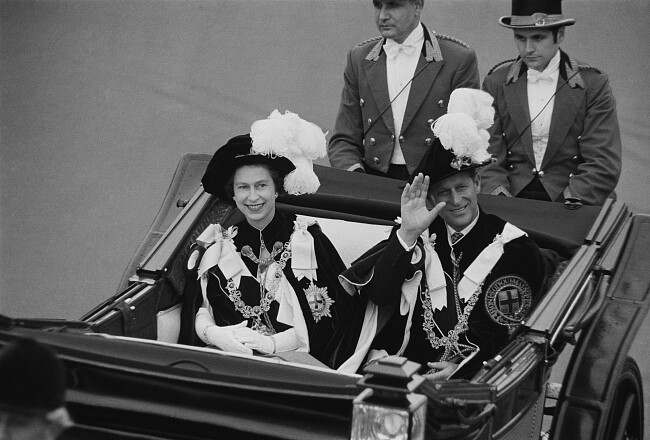 Elizabeth II and Prince Philip at a festive parade, 1969
Behind the strict protocols and official ceremonies, Prince Philip was a man with a lively mind and a sharp sense of humor, which was not always understood by outsiders. His direct manner of speaking and famous “Philippics” were often not a sign of rudeness, but an attempt to defuse the situation and break the ice of formality, which he himself did not particularly like. This trait made communicating with him unpredictable, but for those close to him, very human.
In his private life, he was a reliable support for the queen and the head of a large family. He found his own difficult path, remaining in his wife's shadow for decades and devoting all his energy to this role. His interests — from inventing and drawing to actively promoting sports and nature conservation — reveal a deeply curious and active nature that sought to bring practical benefits rather than simply occupy a place of honor.
Thus, his true portrait is made up of contrasts: a disciplined sailor who rebelled against palace conventions; a strict father who sincerely cared for his children; a faithful husband whose devotion became the foundation of the entire modern British monarchy. Behind the scenes, he was not just the queen's husband, but a strong personality who lived a long life honestly and on his own terms in the very center of a golden cage.


