
Partings are an easy-to-understand yet important hairstyle element that can significantly alter your appearance. The way you part your hair can accentuate your best features and work well with your style, whether it’s subtle or bold. You can choose your hairstyle more wisely if you are aware of the various partings.
Every choice has a different effect, whether you want a trendy side part or a traditional middle part. This post will discuss different parting techniques and how you can use them to improve your overall look. Understanding how to use partings well can change your hairstyle by adding volume and framing your face.
We’ll go over common parting methods, how to match one to your face shape, and how to get the ideal part every time. Explore how a well-chosen parting can completely transform your hairstyle.
| Parting Type | Description |
| Middle Parting | Splits the hair evenly down the center of the head, creating a symmetrical look. |
| Side Parting | Divides the hair off-center, adding volume and shaping the hairstyle to one side. |
| Deep Side Parting | Placed farther to one side for a dramatic, stylish look with more volume on one side. |
| Diagonal Parting | Angles the part from one side to the other, often used to create a more dynamic appearance. |
| Zigzag Parting | Features a zigzag pattern instead of a straight line, adding texture and interest. |
| Three-Section Parting | Divides the hair into three sections for more complex styles or to help with styling techniques. |
- Types of partings on the head
- Straight parting
- Side parting
- Circular parting
- Vertical parting
- Horizontal parting
- Diagonal parting
- Sigzag -shaped parting
- Sagittal parting
- Other types of partings in hairdressing practice
- How to determine your natural hair parting
- How to choose a hair parting depending on the shape of the face
- For a round face
- For an oval face
- For a rectangular and square face
- For a diamond-shaped face
- For a triangular face
- For a pear-shaped face
- Photo ideas of different parting options for hairstyles with bangs
- Video on the topic
- Dividing the head into zones
- Dividing the hair into zones. Dividing the hair into partings. School hairdressers Indigo
- Dividing the head into zones and partings. Lessons for beginner hairdressers
Types of partings on the head
A parting is a line that splits the mass of hair into sections that are symmetrical or equal. There are two reasons why in hairdressing this simple line is equivalent to having no hands.
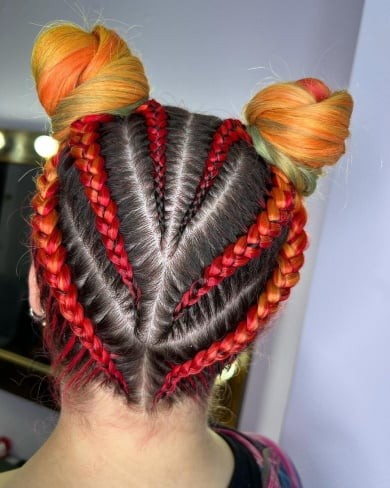
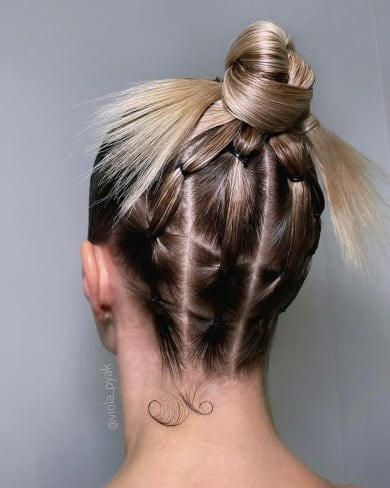
First, after discussing with the client how precisely he wears the parting, the stylist modifies the haircut to reflect this information. The form will appear unforced and won’t present any issues in day-to-day living. Additionally, these lines stand out on their own during styling, giving the hairdo a graphic appearance. Hairdressers refer to these male and female head partings as decorative.

Secondly, there are constructive partings, which are devices used for intricate coloring and zoning the head during the haircut. Working with individual sectors is more convenient, and the zoning technology enables you to achieve the desired result, which is harmonious haircut proportions and highlights that fall naturally on the hair.
Therefore, partings can be both functional and ornamental. And which of them are you able to use?
Straight parting
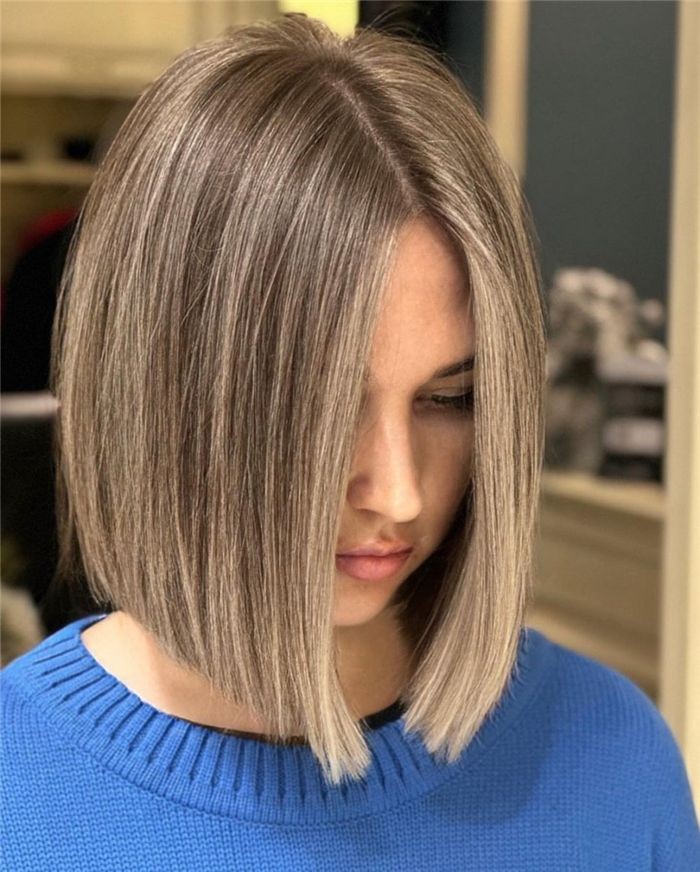
There is a single, straight parting in the center of the head, where the hair is split into equal zones on the left and right, and a line connecting the forehead and crown at its extremities. Fashion legends claim that the playwright Oscar Wilde, who popularized the short French bob haircut, is credited with starting the trend of straight partings.
Experts at SalonSecret provide a life hack. The hair needs to be disciplined with strong hold styling when creating a rigid straight parting. This advice is especially important for sleek hairstyles that can’t stand frizz. Be mindful of Vavoom, the ruler! The degree of fixation and finish of each spray by Matrix varies (take Vavoom! Extra Full for a satin shine).
L’Oréal Professionnel’s Spray Fix Anti-Frizz, which has an antistatic effect, shields hair from UV rays and humid air, which is the primary cause of frizz.
Side parting

For women, a side (or side) decorative parting looks good in updos as well as on loose hair when you want to add some lightness to your styling. And men wear it almost exclusively because modern men’s haircuts are made up entirely of universal solutions, with the exception of trendy curtains.
Unexpected but welcome benefits include the parting’s ability to visually lengthen a narrow forehead and boost hair volume.
When it comes to haircutting techniques, vertical partings that are shifted to the left or right of the sagittal plane heads are synonymous with constructive side partings.
Circular parting
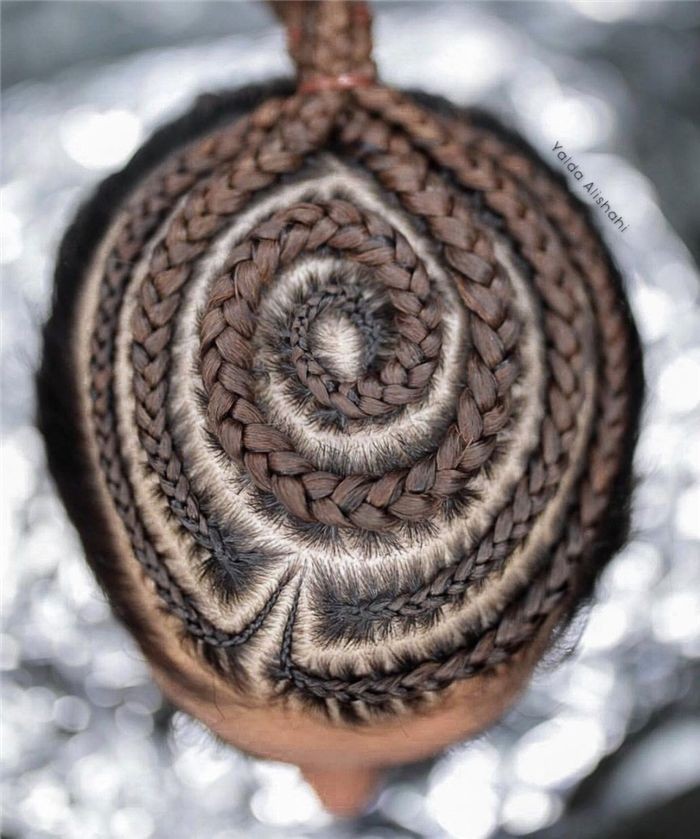
It is performed encircling the head, dividing the temporal and occipital regions from the upper zone. Creative braids make use of circular decorative partings. Stylists use constructive circles to verify the accuracy of pivotal partings, which are radial and begin at a single point. This is a great method for graduated haircuts on long hair.

Fascinating fact: the "relative" of circular and sagittal partings, the arch, or arc, is essential to the technology of shaggy haircuts and hair extensions. In shag, graduation is done on both sides after a vertical line divides the occipital zone. The master uses arched partings that resemble mirrors to divide the working zones.
Vertical parting
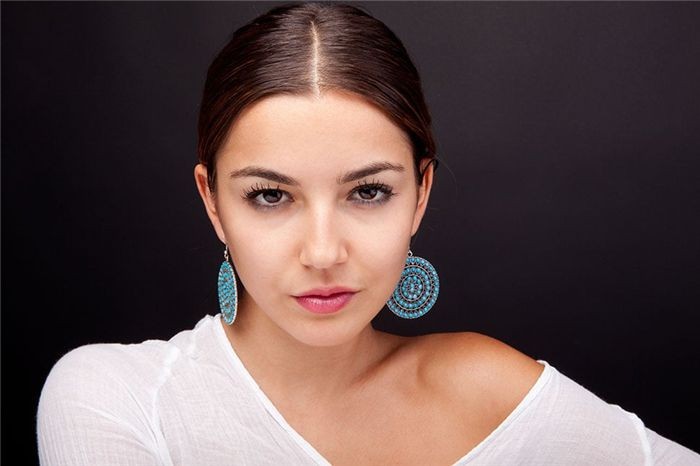
One of the most popular head partings—stylists use it for any kind of haircut. When coloring, zoning starts from the middle vertical line.
The parting extends from the forehead’s edge line to the neck’s edge line where hair grows. Before cutting, the side zones, working strands, and bangs area are frequently divided by vertical lines that are offset from the center.
Horizontal parting
Micro highlights, balayage, and foilage are essential tools for intricate coloring techniques and traditional graduation. The parietal zone and the back of the head are divided by the central horizontal parting, which runs from ear to ear through the crown’s highest point.
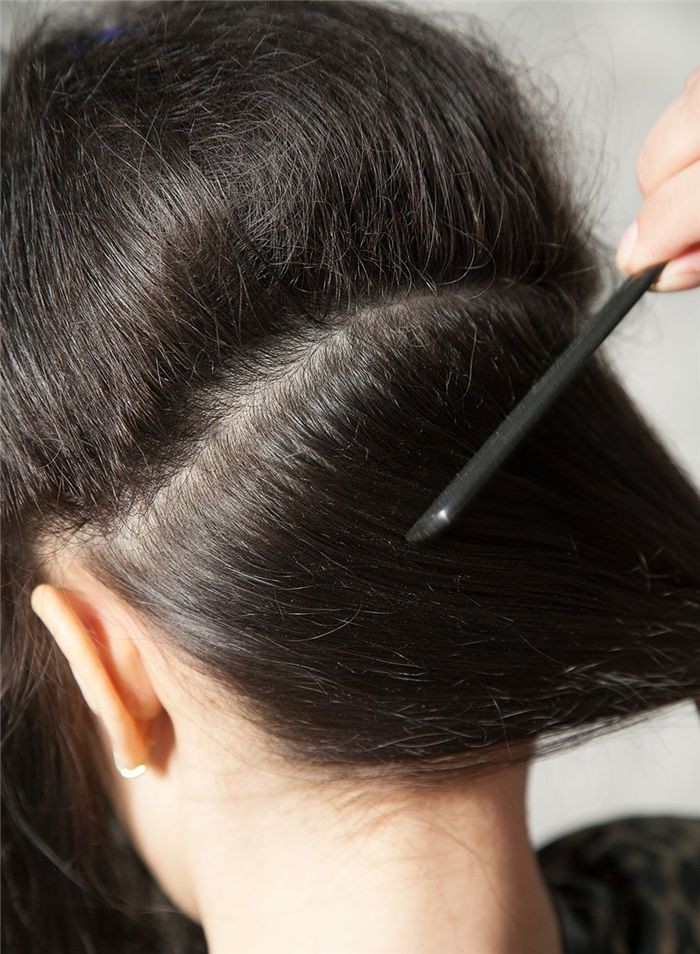
Additional horizontal lines can repeat the shape of the head by curved smoothly or parallel to the floor, depending on the coloring technique and cutting technology used.
Fascinating fact: The majority of haircuts you are familiar with are blended because the technology used to create them combines different kinds of partings. A bob-caret, for instance, has lines that are zoned vertically, horizontally, and diagonally.
Diagonal parting
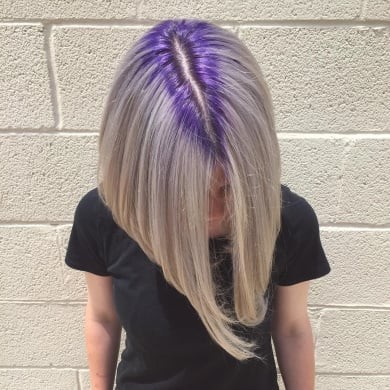
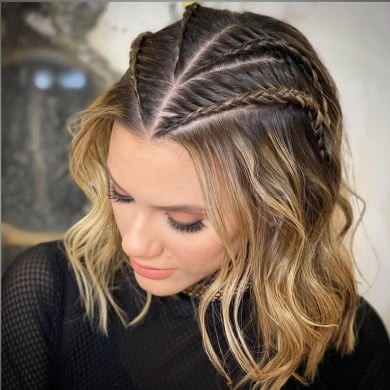
Hairstyling instructors observe two variations of this parting pattern: occipital (the strand falling toward the back of the head) and facial (the direction of the strand falling towards the face, lengthening). Our team of experts says that using diagonal cutting will help you create a lighter, more flowing hairstyle with smoother contours and natural strand movement.
The local segments of the head are divided by relatively short diagonal lines that serve as an auxiliary tool for hairdressers when it comes to smoothly reducing the lengths of hair in various zones.
Sigzag -shaped parting
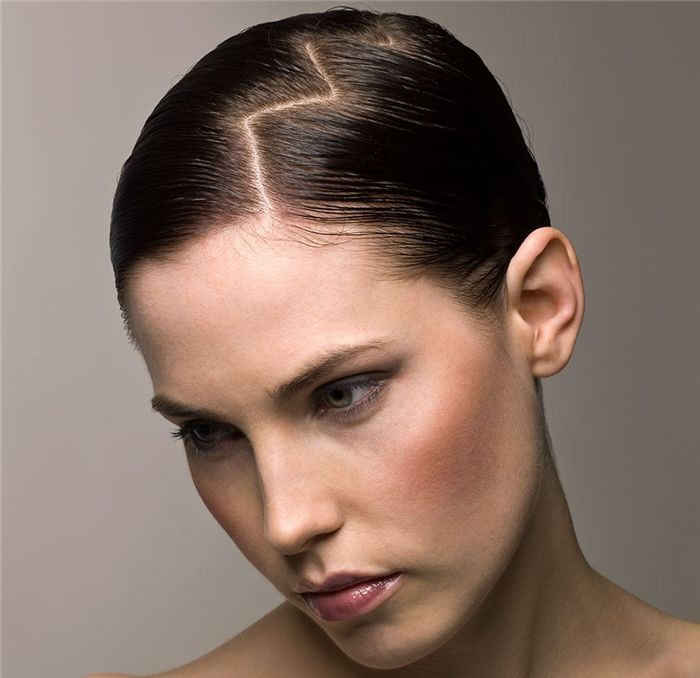
The "zigzag" figure is back in style! Straight hair and graphic haircuts look great with the parting; add a low tail highlight, smooth long-beam, and texture Bob-drum.
Experts at SalonSecret provide a life hack. You will need styling with a strong fixing effect and a comb with a scrap handle for a visible zigzag parting.
Matrix of Brand Technology Suggest using a gel controller. Use a vintage photo with a "wet" effect on damp hair when the mood strikes.
Sagittal parting
Sagittal schools, another term for the same central horizontal parting, are defined by hairdressers as a parting from ear to ear through the highest point of the crown. However, practicing hairdressers are prepared to dispute because the body is divided into mirror-symmetrical right and left halves by the "sagittal plane," which is a vertical division in anatomy.
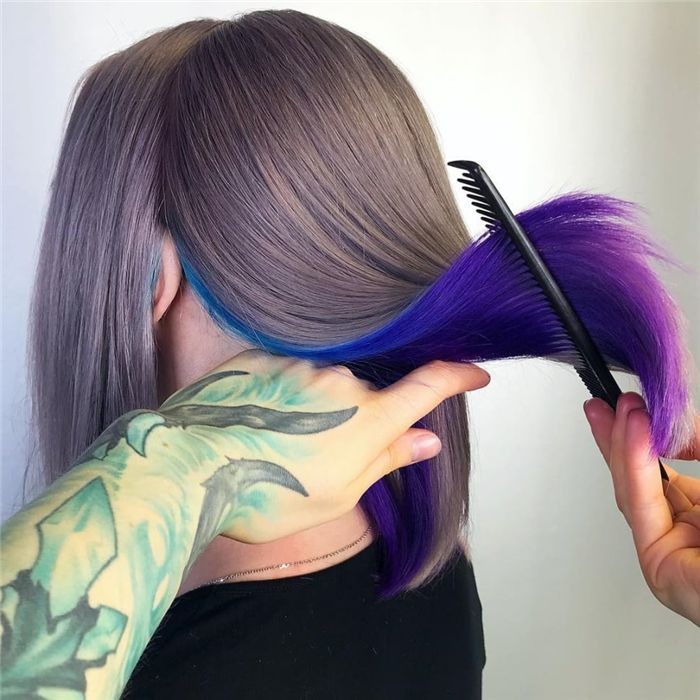
The tricky decision of whether to part sagittal plane horizontally or vertically should be left to stylists. An experienced hairdresser studies new techniques mainly with his eyes, not his ears, because he always accounts for potential misunderstandings and translation issues.
Other types of partings in hairdressing practice
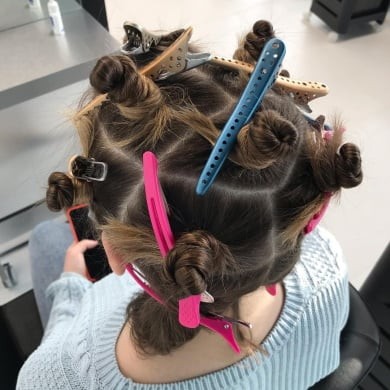
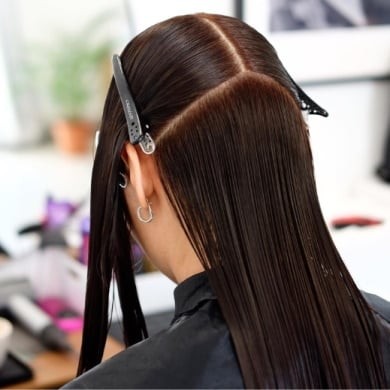
A few more words from the dictionary of hairdressers.
- Cross-shaped parting – formed at the intersection of horizontal and vertical partings.
- T-shaped parting – half of a cross-shaped parting.
- U-shaped parting – two vertical lines go from the frontal depressions on the line of marginal hair growth and rest against the central horizontal parting.
- Horseshoe – obtained by extending the side lines of a U-shaped parting to the crown area.
- Radial partings – divide the entire mass of hair into equal triangular sectors.
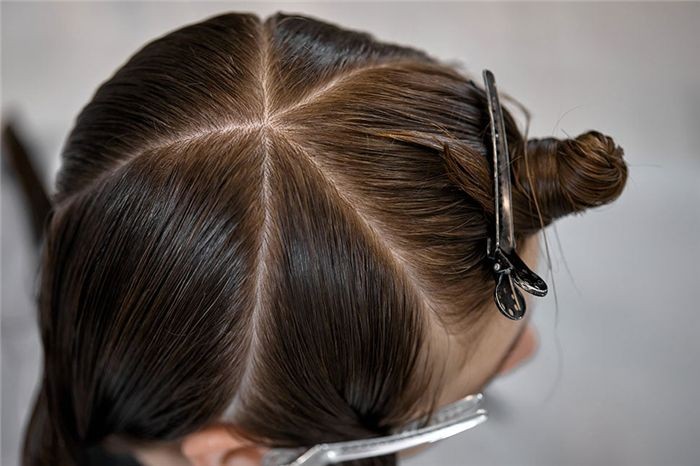
L-shaped, angular, and chessboard partings will undoubtedly be remembered by fans of the original styling. They have precisely zero construction, but their styling is distinctive.
How to determine your natural hair parting
For many girls, hair with particular growth characteristics is an eyesore and a frequent sight for hairdressers. Because the hair behaves erratically in some parts of the head, styling also becomes problematic. Some people find that even a regular parting is inconvenient because their hair keeps falling out of their style.

In a matter of seconds, try to ascertain where your natural parting is.
- Dry method. Turn your head down and comb your hair – your hair should be clean, without styling or leave-in care. Straighten up sharply in front of the mirror and see how exactly the strands fall apart, while forming a clear direction of the natural parting.
- Wet method. Immediately after a shower, lightly dry your hair with a towel and comb it from your face to the back of your head. Then put your palm on the crown of your head and gently move the strands towards your forehead. In the parietal zone between your palm and the edge of the growth line, the hair will form a kind of dome with a noticeable "failure". This dip indicates the natural location of the vertical parting.
In a similar vein, stylists choose the direction in which hair grows in order to successfully modify the haircut to fit the client’s head’s architectural features while also accounting for the strand’s angle.
How to choose a hair parting depending on the shape of the face
Skilled stylists perform true miracles, completely changing a person. Properly chosen hair color, length, and haircut are not essential. Finding the right parting is crucial because it will help to balance the face’s proportions and highlight its features.
Together, we will determine the best hair parting for your facial shape.
For a round face

The cheeks’ noticeable volume is what defines this shape. The face needs to be stretched in order to visually reduce them, and a straight parting on loose hair does this perfectly.

It is preferable to use a side parting when gathering a ponytail or bun.
For an oval face

An oval face shape allows for a wide variety of hairstyles and haircuts. When worn loose, a straight parting brings attention to well-defined features. Additionally, stylists recommend side, zigzag, or extravagant angular partings for more voluminous hairstyles.
For a rectangular and square face

A distinct lower jaw and chin appear softer against the backdrop of long, curly hairstyles. Side and natural partings will intensify a hairstyle’s transformational power.
For a diamond-shaped face

The cheekbones of girls with diamond-shaped faces are notably wider than the forehead and chin. Together with voluminous hairstyles, bouffants, and soft curls, a side parting with long bangs styled to the side will look great.
For a triangular face
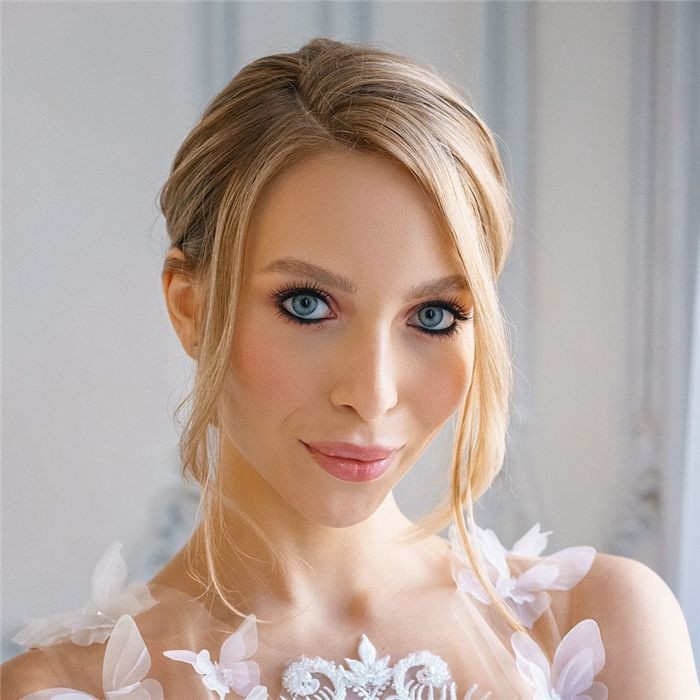
Your hairstyle can have curls at the ends of your hair and smoothness on top of your head because you have a narrow chin and a large, thinker’s forehead. either diagonally or straight, depending on your preference.
For a pear-shaped face
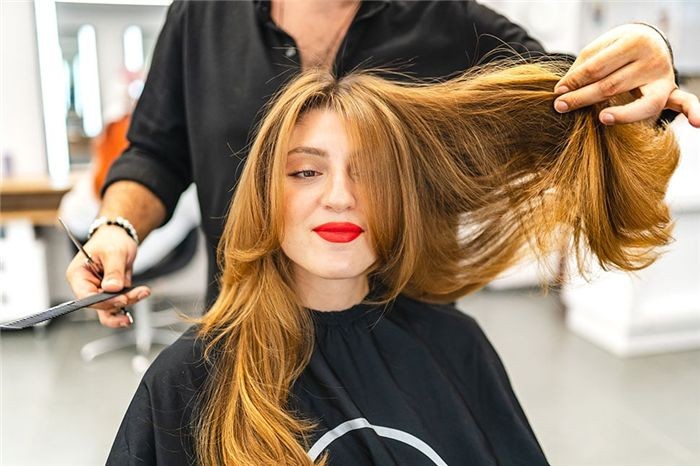
In contrast, the chin is prominent and assertive, and the forehead is narrow. Give up on a straight parting in favor of an oblique or vertical one that runs from the center of the crown to the temple.
A key component of hairstyles, partings have a significant impact on how your hair feels and looks overall. Selecting the ideal parting can accentuate your features and balance out the shape of your face. Trendy zigzag styles and traditional center partings are both available. This post will discuss different kinds of partings and how they can change your hairdo and help you achieve the ideal look that fits your personality and sense of style.
Photo ideas of different parting options for hairstyles with bangs

Long bangs parted to the side. Make the forehead more symmetrical and visually narrow the face. The primary requirement is that the hair be long.
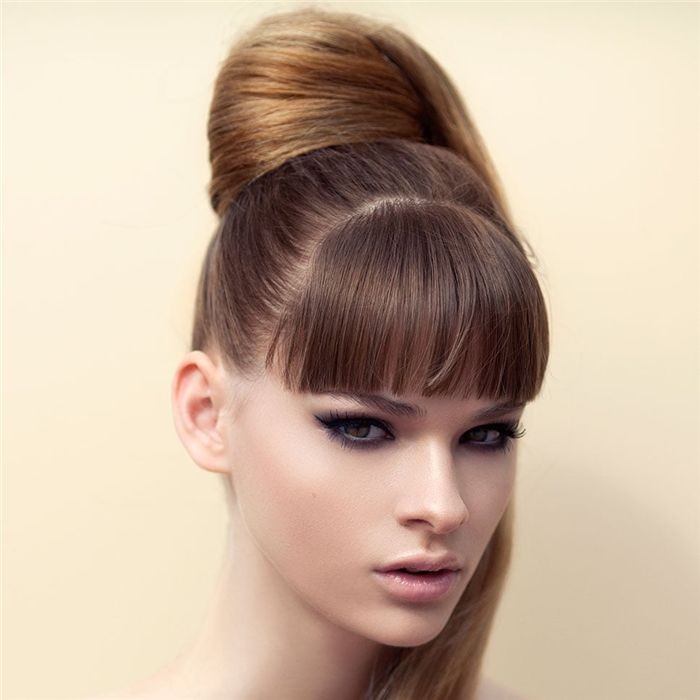
A sleek bang on a high ponytail that is parted in an arched manner from the main mass of hair. It has a retro vibe, which works better with a dress with a floral print and big accessories than against it.

Bangs parted straight down the middle into two sides. The classic curtain bangs are always in style, and they are now worn long, sometimes extending below the lip line.
Partings are very important for defining your hairdo and determining how your entire appearance comes together. Any style of parting, whether it’s a traditional middle part, a chic side part, or something edgier like a zigzag, can significantly change how you look. The ideal parting accentuates your hair’s natural flow while also balancing the shape of your face.
Try experimenting with different partings to update your appearance and try out new looks. Don’t be scared to experiment; occasionally, a small adjustment in parting can have a significant impact. Try a variety of looks to determine which one best matches your attitude, the situation, or even your current hairdo.
In the end, partings are a flexible hairstyle tool. You can maintain the best possible look for your hair and express your own style by making informed decisions based on your understanding of how different partings affect your appearance. Go ahead and try out all the options; you might discover a new hairstyle that you love!


