Have you ever had this happen to you: you go into a store looking for something specific, and half an hour later you're wandering the aisles in complete confusion? Or you're trying to pick out a gift, but all you can think of are general words like “something beautiful and useful”? The problem is often not the choice, but how it is presented to us.
The ability to offer a product range is not just about putting goods on a shelf. It is the art of seeing the need behind the request. A customer asks for an umbrella, but what they really need is a solution for rainy weather. This could be a compact umbrella-cane, a raincoat, or waterproof shoe covers.
In this article, we will discuss how to build your product range and communicate with customers so that for any situation—whether it's a camping trip, an urgent gift, or kitchen renovations—you have not just one, but several perfectly suited ideas at your fingertips. We will talk about simple principles that will help you think like your buyer and fully meet their needs.
To offer a range for any situation in life, you first need to understand that people are not just looking for products, but for solutions to their everyday tasks — whether it's a morning when there's not enough time, evening cleaning, or preparing for a meeting with friends. It is important to think not about the products themselves, but about how they fit into real life: to put together a line of products that covers different aspects, from convenience and economy to self-care. Then the product range ceases to be a set of things and becomes support — understandable, familiar, and timely.
- Types of product ranges and models
- Colors
- Patterns and prints
- An app for the select few: will Ozon Select change the rules for brands and buyers?
- 3 days, 200+ light industry factories, 10 countries: don't miss out on the leading industry event
- Lessons for beginners: a guide to using neural networks
- Fast Fashion Empire
- The puzzle method
Types of product ranges and models
In the MODERN CASUAL zone, a large proportion of jackets and suits, shirts and blouses, feminine dresses, and form-fitting knitwear complement the more formal range. LIMÉ's expertise in well-fitting designs is best highlighted by the suit group, which offers a wide range of jacket designs combined with various trouser styles.

In the DENIM&ATLESUIRE section, the main assortment consists of tailored knitwear (pants, hoodies, sweatshirts), monochrome and printed with lettering, as well as jeans and other denim styles. The spring-summer 2023 collection features preppy style items, knit jumpers with embroidered lettering, and pastel-colored club jackets.
Interestingly, each zone uses visual merchandising to show how sweatshirts can be paired with classic wide-leg pants, mesh dresses with jackets, black dresses with white collars with leather jackets, etc. The brand demonstrates the wide range of styling and mix-and-match possibilities for models of different styles and silhouettes, allowing shoppers to “learn” new ways of dressing.
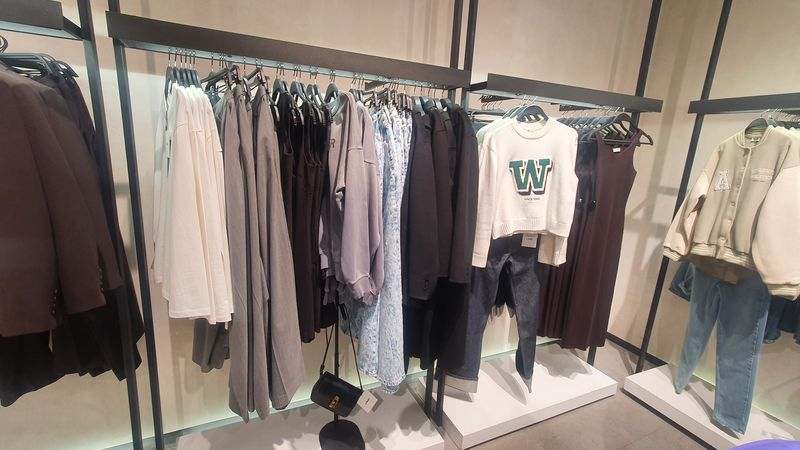
An important feature of LIMÉ is its wide range of basic wardrobe items. These versatile, seasonless styles can remain in a modern woman's wardrobe for a long time.
- Outerwear: jackets with patch pockets, an abundance of trench coats, leather biker jackets, seasonal quilted cropped jackets, and coats.
- Blouses and shirts straight or flared cut in lyocell, cotton, and satin.
- Denim: wide, straight, flared, and mom fit jeans; denim jackets.
- Cut knitwear various densities and textures: tops, T-shirts, long-sleeved T-shirts, bodysuits made of cut knitwear of various textures, hoodies, and joggers.
- Costume group: elegant two-piece and three-piece sets (with added skirts or shorts).
- Knitted knitwear: t-shirts with dropped loops, striped pairs (cardigan and top), polo jumpers.
- Dresses: knitted jersey with thin straps, straight mini skirt, midi sheath dress, satin slip dress.
- Seasonal offer: summer loose sets made of alasa (blouse + trousers).
Colors
The sales floor deliberately highlights the best-selling colors for the cold months of the spring season: black and white (represented in large blocks), coffee, various shades of gray (hoodies, denim, suits), an abundance of beige shades, from the lightest ivory to the darkest, bordering on ochre shades or light khaki (T-shirts, sweatshirts, jumpers, blouses, suits). At the same time, there is a noticeable addition of brighter colors, which breaks up the monotony of the noble basic shades. Bright shades are used very precisely and do not distract attention from the central colors of the collection. The most prominent accent colors in the sales area at the time of the first spring-summer 2023 deliveries are: bright lavender for suits, blouses, and polo bodysuits; grass green for tweed jackets, feathered cardigans, trouser suits, seamless knitwear, and tank tops; two shades of blue and turquoise for suits; bright strawberry pink.
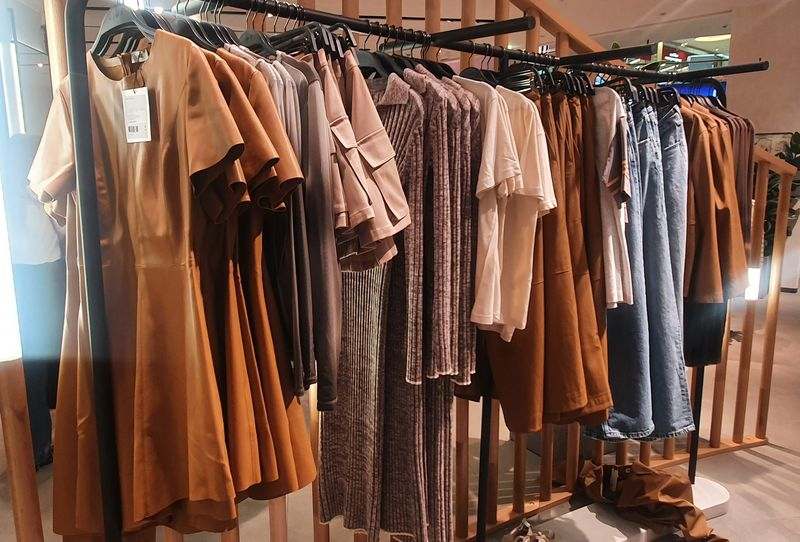
It is important to note the use of brown shades in this trend. The central area of the store features a variety of this color: caramel for leather models, darker for melange knitwear, coffee with milk for suits and plaid shirts. The appealing orange color is balanced by magenta and brown stripes in a knitted cardigan + skirt set.
The most noticeable shades in denim are seasonal light blue (two or three shades) without scuffs and with various washing effects, boiled white denim models, dark indigo, vintage dusty gray, and white.

The addition of brighter shades radically distinguishes the spring-summer 2023 collection from the fall-winter 2022/23 and even spring-summer 2022 collections. For example, last summer's collection featured a range of large capsules in one color, occupying one side of the store's perimeter. For example, milk and pink capsules at the Paveletskaya Plaza shopping center.
Patterns and prints
Prints and patterns are not a key ingredient in the LIMÉ brand DNA; they were present in the sales area in a limited range of models. They are mainly used for T-shirts — in the form of inscriptions in contrasting, legible colors. Prints with illustrations are most often in muted tones.
Ornaments: stripes as a must-have of the season for knitwear; polka dots for the dress group; stripes for the suit group; Argyle for jumpers; Buffalo check for shirts; Pied de poule for two jackets; Ombre for mesh models (dresses and long sleeves); Floral ornament in jacquard and small flowers on a black background; Leopard.
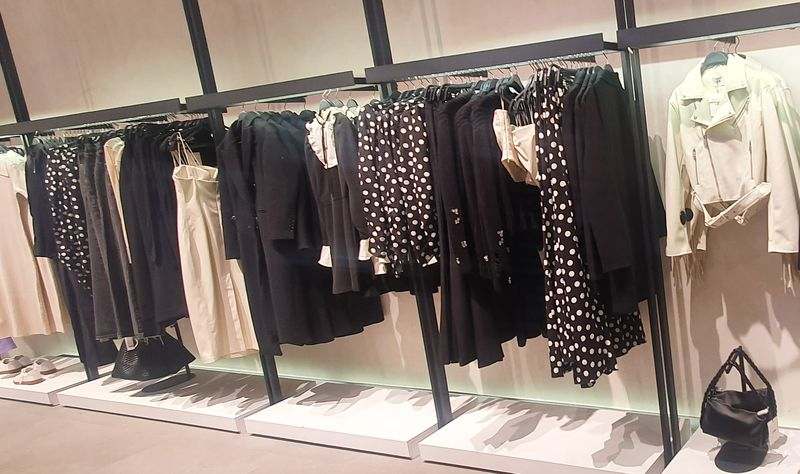
In the store's 700 square meter space, carefully added embellishments to the monochrome assortment create a mood and draw attention to the plain-colored models.
All the latest fashion industry news once a week
All the latest fashion industry news once a week
Read also

An app for the select few: will Ozon Select change the rules for brands and buyers?
An app with mid-range, mid-to-high-end, and premium fashion items will connect brands with a solvent audience.
3 days, 200+ light industry factories, 10 countries: don't miss out on the leading industry event
From November 19 to 21, Moscow will host the 20th BEE-TOGETHER.ru exhibition, the main platform for fashion brands to find manufacturing partners.

Lessons for beginners: a guide to using neural networks
How can artificial intelligence benefit the fashion business?
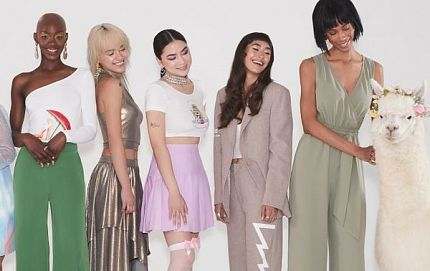
Fast Fashion Empire
How Shein defeated Amazon and reinvented fast fashion – in The Guardian article.

The puzzle method
How to make your product stand out on the Wildberries marketplace in the context of an “endless shelf” in heated fashion retail niches?

So, offering the right product in any situation is not magic, but a thoughtful approach. The key is to see the world through the eyes of your customers and see not just their needs, but their everyday lives with all their joys and worries.
Create flexible collections and think in terms of scenarios rather than just product categories. Your goal is to become the go-to assistant for solutions, not just purchases. When people find everything they need for their specific situation with you, it builds trust and turns a one-time purchase into a long-term relationship.
Remember that your product range is your language of communication with the customer. Speak it clearly, empathetically, and with a willingness to help. Then your store or website will become not just a point of sale, but a reliable source for a wide variety of life moments.