
When people talk about Denis Shvedov, many remember his vivid roles in film and theater. However, behind the scenes is a man with deep thoughts, his own rules, and a unique view of creativity.
In this conversation, he reveals a new side of himself. We'll talk about what he's doing now — what projects are capturing his attention, what unusual habits he can't give up, and where he finds inspiration.
This conversation is not just about plans, but about the inner world of an artist. About the place where they return to recharge their batteries, and about the little rituals that help them move forward.
- Denis Shvedov Are theater and film acting different professions, in your opinion?
- Why do people need theater and cinema today?
- Do you enjoy social events? Is it work or leisure for you? How do you prepare for them?
- Do you have any hobbies besides motorcycles that help you recharge and take a break from filming?
- Do you have any unusual habits? How do you feel about them?
- What is your place of power?
- In September, the film Tango will be released, in which you star alongside Yulia Snigir. What can you tell us about your character and working with Yulia?
- Tell us how you found out about the “Field of Miracles” project for the START platform and what attracted you to it?
- In August, you are flying to another continent to film My Africa. How are you preparing for the trip and what do you expect from the work?
Denis Shvedov Are theater and film acting different professions, in your opinion?
Initially, there is one basis—we must make the viewer empathize with the fate of the character and, in general, with the fate of the entire story told in the work, be it a movie or a play in the theater. The methods of work and the method of presenting the material differ here.
Denis Shvedov, a well-known Russian actor, shares his plans for the future in a candid conversation: He talks about upcoming roles that truly inspire him, unusual habits — from morning rituals to a love of silence before filming — and the place where he feels particularly strong and focused. This is not just a story about work, but a glimpse into the personal world of a man for whom acting is not a profession, but a way of understanding himself and the world.
Why do people need theater and cinema today?
It is entertainment, relaxation, getting quick and easy emotions. Then, following that, it is an opportunity to learn something new, to try to see in cinema the prism through which we view social or cultural phenomena, to learn how people in another country react to certain events, to use images or artistic fiction to tell a story familiar from childhood or to present a plot in a completely new way. This is already a more research-oriented perspective.
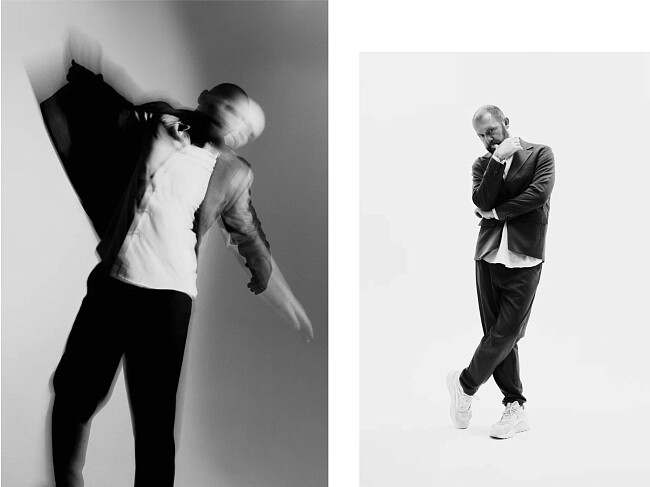 Denis Shvedov
Do you enjoy social events? Is it work or leisure for you? How do you prepare for them?
For a very long time, I tried to minimize my appearances because I feel out of place. I feel like I am completely incapable of posing for photos or behaving like my colleagues from other fields (musicians, pop singers). At the same time, I enjoyed and still enjoy watching the lives of my favorite artists, whom I respect for their talent and humanity.
I go on stage in the theater, I bow to the audience, and that's important. I compared how the audience would feel if I didn't come out to bow to them, and it would be strange. I began to perceive social appearances as a kind of interaction with the people for whom we make films and performances, an opportunity to communicate, get acquainted, and come up with something new and useful for each other. It's a way of revealing myself to the audience who watches my work. I recently changed my attitude towards this and now I go out into the social sphere more often and try to share my life.
Do you have any hobbies besides motorcycles that help you recharge and take a break from filming?
In fact, it's the same as with people: go for a walk in a park where you haven't been before or haven't been to in a long time, visit a new cafe, travel to a new place. Just recently, I found myself in Kabardino-Balkaria and Karachay-Cherkessia, where I had never been before. I was simply shocked by how beautiful and monumental it is, and I really want to go back there. There are still a huge number of places in our country where you can get similar impressions. That's why my hobbies are traveling and sports. A few days ago, I went wakeboarding, and it was wonderful.
 Denis Shvedov
Do you have any unusual habits? How do you feel about them?
I don't have any unusual habits. When I'm working, I don't have time to find anything new, and I even regret it. I would like to have a hobby that doesn't require incredible expenses, space, and everything else, so that I can learn something new and do it with my own hands. I've never been able to do that, but now I feel like I want to. Maybe in ten years, I'll buy a plot of land, start growing flowers or other crops, and open my own shop.
What is your place of power?
In fact, for me, a place of power can be anywhere, since my profession involves working with a huge number of people and constant communication. I understand that I feel comfortable where I am accepted for who I am, with all my strengths and weaknesses. And when I am with such people, I feel fulfilled.
In September, the film Tango will be released, in which you star alongside Yulia Snigir. What can you tell us about your character and working with Yulia?
This is not an everyday story about a couple who love each other, something happens to them, they start dancing the tango, and through dance they make up and come to a happy and long life together. No. This story is semi-mystical.
This was my first time working with Yulia Snigir and the wonderful director Sergei Sentsov. I would love to work with them again on my next project or on the sequel to Tango. It was easy and creative. What I remember most are the scenes where Yulia and I danced. It was very beautiful.
 Denis Shvedov
Tell us how you found out about the “Field of Miracles” project for the START platform and what attracted you to it?
I love moments like this, when it's just chance. I came to the premiere of the film at the Khudozhestvenny cinema, saw a free seat, sat down, and there was a couple sitting next to me, and we just got acquainted and started small talk. The girl turned out to be Katya, our producer. There are often such proposals when “filmmakers” meet and say, "Let's do it! Let's do it,“ and then meet again five years later. We talked, and then it turned out that the casting director on this project was a good friend of mine, with whom I have connections not only at work but also in society; we have common interests. We started communicating, they sent me the script, I read it and said ”yes." Everything happened very quickly, and now we're filming this project. I love it when that happens.
In August, you are flying to another continent to film My Africa. How are you preparing for the trip and what do you expect from the work?
We have all been reassured: it is winter on that continent now, so all the scary creatures are hibernating, which means no one can bite us and we don't need to get any scary vaccinations. We are supposed to meet with the makeup artist in a few days, and we may come up with a different look. No, we haven't decided to get dreadlocks to blend in with the culture of the country as much as possible, but we are interested in playing with our appearance, and director Olga Akatieva responded and said it was a good idea. So we're going to try to make something new out of me. I am thinking about this trip with great ease and enthusiasm, because being on another continent and shooting a film in the most pleasant company is not even work, it is pure pleasure. So I am preparing to have the most comfortable and enjoyable time possible.
 Denis Shvedov
The conversation with Denis Shvedov turned out to be very lively and sincere. He appeared not just as an artist, but as a profound and versatile person for whom creativity is a constant search and an inner need.
His new projects are bold experiments and a desire to go beyond the usual boundaries. And stories about unusual habits and “places of power” particularly vividly show where he draws inspiration and energy for such a rich life.
Ultimately, this conversation leaves the impression that Denis's main project is himself, his inner world, and his honest dialogue with the viewer. And that is his greatest strength.


