
Shoes are not just a way to protect your feet. They are the finishing touch to your look, a way to express your style and mood. The world of women's shoes is vast and varied, and it is easy to get confused among the multitude of names and styles.
From ballet flats to boots, each model consists of details that we sometimes don't think about. But it is the last, heel, or type of instep that determines whether the shoes will be comfortable and how they will look on your feet.
Let's explore this fascinating world together. We will look at the different types of shoes for different situations and learn the names of their main parts. This knowledge will not only help you choose the right shoes or boots, but also understand what makes them so special.
- Shoes
- Pumps
- Ballerina flats
- Winklippers
- With a strap
- Moccasins
- Loafers
- Espadrilles
- Topsiders
- Mary Jane
- Mules
- Babouche
- Oxfords
- Monk shoes
- Slingbacks
- Brogues
- Derbies
- Creepers
- Sandals
- Sandals
- Clogs
- Sandals
- Sandals
- Gladiators
- Birkenstocks
- Sneakers and trainers
- Sneakers
- Sock sneakers
- Sneakers
- Slip-ons
- High tops
- Sneakers
- Boots
- Ugg boots
- Chelsea
- Timberlands
- Chukka
- Martens
- Desert boots
- Ankle boots
- Cossacks
- Hikers
- Combat boots
- Grinders
- Slippers
- Flip-flops
- Flip-flops
- Crocs
- Aqua socks
- Mules
- Dianets
- Sliders
- Boots
- Stockings
- Pipes
- Cossacks
- Knee-high boots
- Dutiks
- Riding boots
- Wellingtons
- Cowboy boots
- Jackboots
- Sloochies
- Burkas
- Valenkis
- Pimas
- Ankle boots
- With a wide upper
- With a fitted upper
- On the heel
- Flat sole
- Types of heels and soles
- Wedge
- Platform
- Viennese
- Block heel
- Cone
- Wedge heel
- Column
- High heel
- Stylet
- Ryu-mochka
- Comma
- Cowboy
- Trapezoid
- Fancy
- Shock
- Sole and heel height
- Flat sole
- Low heel
- Mid heel
- High heel
- Very high
- Elements of women's shoes
- Sole
- Back
- Toe cap
- Upper
- Medaillon
- Shank
- Eyelets
- Tongue
- Insole
- Arch support
- Heel
- Cushioning
- Upper
- By season
- Winter
- Summer
- Demi-season
Shoes
Shoes –
a type of women's shoe that does not cover the foot above the ankle or the back of the foot.

Pumps
Shoes with a deep cut and a slightly pointed toe, without fasteners or straps.

Ballerina flats
Classic women's shoes without heels, with a closed toe and flat sole.

Winklippers
Shoes with pointed toes or pointed pumps. The pair can be plain or decorated with prints, buckles, or rivets.

With a strap
A type of shoe that is additionally equipped with one or more straps at the ankle or across the back of the foot.
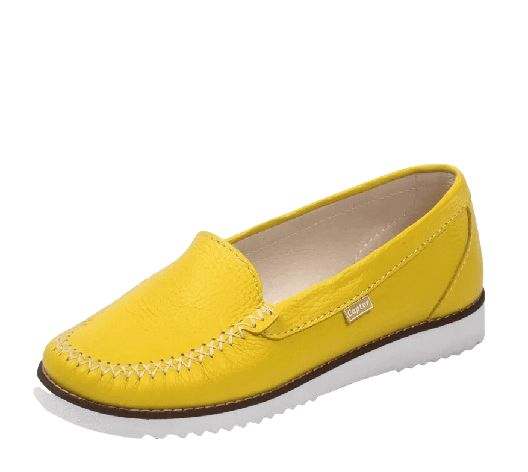
Moccasins
Shoes with flat, soft soles and tongues. No fasteners or laces. May be decorated with tassels or fringe in the style of North American Indian costumes.

Loafers
Shoes with a stiff sole and a chunky, low heel. Without fasteners, they can be decorated with decorative buckles and rivets.

Espadrilles
Soft, usually textile shoes without heels. Worn on bare feet.

Topsiders
Similar to moccasins, but made of denser material, with a light-colored sole and laces. The laces often pass through the back of the shoes and are threaded through eyelets in the instep.
Mary Jane
Shoes named after the comic book character Buster Barun. These are neat shoes with a rounded toe and a strap across the back of the foot.
Mules
Shoes with a closed or partially open toe, without a back. Originally they had a small heel – up to 2 cm, modern models can be made with a high heel.
Babouche
Leather shoes with a closed toe and no back. Similar to mules, but with a pointed toe and no heel.
Oxfords
Low shoes with hidden lacing—the tongue is covered by the vamp.
Monk shoes
Shoes or boots without laces, equipped with buckles—there can be from one to three.
Slingbacks
Open-heeled shoes with a strap and a closed pointed or rounded toe.
Brogues
Shoes or boots with open lacing, decorated with perforations – small, non-through holes along the seams, on the vamp or back.
Derbies
Classic shoes with open lacing – the laces are sewn over the vamp, allowing them to be folded back. There are also perforated derbies – these are called brogues.
Creepers
Creepers, creepers—shoes with thick soles—platforms. The classic version has a soft thick sole and a patent leather or suede upper with laces.
Sandals
Sandals
A collective name for different types of open shoes – strappy, woven, textile, elastic.
Clogs
Clogs, clogs – open shoes with a low back or no back at all, with a wooden or imitation wood platform sole or wedge heel.
Sandals
Sandals
A type of sandal with a closed toe and back.
Gladiators
Roman sandals with lots of leather straps. They can be high, reaching up to the knee, or low, reaching to the middle of the calf or lower.
Birkenstocks
Sandals that look like flip-flops with thick soles, usually with orthopedic insoles. The name comes from the first manufacturer, the German company Birkenstock.
Sneakers and trainers
Sports shoes
Sports-style shoes or shoes for sports
Sneakers
Closed shoes with laces, originally designed for sports, but now integrated into everyday wear.
Sock sneakers
Sneakers with a low or medium textile upper without laces.
Sneakers
Sports shoes with a solid sole without bends or grooves, with a smooth, snug upper and laces.
Slip-ons
Lightweight, soft textile shoes with rubber soles. Similar to sneakers, but in the traditional design they do not have laces. Modern models may have laces.
High tops
Sneakers with a high upper on a platform with laces or Velcro fasteners.
Sneakers
Semi-sports shoes, which are high-top sneakers with wedges. Velcro or laces are used as fasteners.
Boots
Boots
Footwear that covers the ankle to the ankle. Traditionally, they have laces, but some modern models may be without laces.
Ugg boots
Boots or shoes with sheepskin lining and a smooth outer surface. The sole is rubber or synthetic.
Chelsea
Boots without fasteners with a narrow upper equipped with an elastic insert.
Timberlands
Originally, these boots were developed by Timberland for workers. They are leather boots with laces. The traditional color is yellow, but models in other shades are also available.
Chukka
Chukka boots are closed, high boots that reach the ankle, with 2-3 rows of laces. The toe is slightly elongated but rounded. They are made from any material, from leather to textiles.
Martens
Boots from the British company Dr. Martens. Heavy boots with lacing up to mid-calf or slightly below. Thick, often rubber soles.
Desert boots
Suede boots with a crepe sole and small lacing on 2-3 rows of eyelets slightly above the ankle.
Ankle boots
Boots up to the ankle or slightly above. With or without heels. Materials: textile, leather, suede. They are not ankle boots, which have a shaft that reaches the middle of the calf.
Cossacks
These boots, which look similar to the boots of the same name, differ only in the height of the shaft. They can be decorated with rivets and buckles.
Hikers
Lightweight shoes designed to support the foot during long hikes. They have a soft, springy, protective sole that prevents slipping.
Combat boots
Army boots with thick soles and tight lacing. Combat boots may have eyelets for laces or special hooks instead.
Grinders
Sturdy boots with thick, rough soles and laces. They are named after the English company that manufactures them, Grinders.
Slippers
Flip-flops
Lightweight, spacious shoes without a back and with an open toe. They traditionally have a rubber sole and are used as beach shoes.
Flip-flops
Slippers with a rubber sole and two straps connecting the big toe and index toe.
Crocs
Rubber shoes made of polymer foam material, manufactured by Crocs. They have a streamlined shape and a floating back in the form of a strap.
Aqua socks
Beach shoes made of soft rubber with small holes, fitting snugly around the foot like socks. Designed to protect feet on the beach from pebbles, sand, and coral.
Mules
Summer slippers without a back, with a flat sole or platform, wedge heel. Often decorated with textile patches, sequins, and rhinestones.
Dianets
An elegant variety of flip-flops, made of leather and sometimes decorated with various embellishments. They can have a wedge heel, platform, or flat sole.
Sliders
A type of sandal with a wide strap across the back of the foot and an open toe. They have a flat sole and usually minimal decoration.
Boots
Stockings
Women's boots with a shaft made of elastic material that fits snugly around the leg. The classic style is slightly above the knee.
Pipes
Boots of various heights, with or without heels, made without fasteners or locks. They have a wide upper, making them easy to put on.
Cossacks
Cowboy boots with a low, slanted square heel. They are usually made of artificial or natural leather.
Knee-high boots
Boots with an elongated shaft – up to the knee and above. They can be heeled or flat-soled, and with different shaft widths – from tight-fitting to loose.
Dutiks
Moon boots, moonwalkers – voluminous, streamlined boots with flat soles made of moisture-repellent fabric with stitching. They often have a warming layer and fur trim.
Riding boots
Soft leather riding boots with high tops. They have flat soles with small heels up to 4 cm. The toe is elongated and rounded.
Wellingtons
Boots originally designed for horse riding with a rounded toe. They have no fasteners or zippers. They are made of leather and rubber.
Cowboy boots
Fur boots designed for extremely low temperatures. The fur part is made of dog or deer fur, and the sole is made of thick felt.
Jackboots
Originally army boots for horse riding. The traditional model has a medium or high, fitted upper with or without laces.
Sloochies
Boots with a wide upper that forms folds at the ankle.
Burkas
Knee-high winter boots made of felt without fasteners or laces, with flat rubber or leather soles. There are shortened versions in the form of boots.
Valenkis
Boots or shoes made of sheep's wool. Valenki boots do not have soles—they are felt, but modern models may have rubber soles and zippers.
Pimas
The traditional footwear of the inhabitants of the far north. Made from the skin of a reindeer, taken from the animal's legs or forehead.
Ankle boots
With a wide upper
Low shoes with a wide, non-fitting upper.
With a fitted upper
Ankle boots with an elastic or simply narrow upper that fits snugly around the leg.
On the heel
Ankle boots with heels ranging from low to very high. Can have a snug or loose upper.
Flat sole
These have no heel or are equipped with a very low heel no more than 1 cm high. The structure of the upper can be either wide or narrow.
Types of heels and soles
Wedge
Combines a sole and a heel. Can be of various heights – from 3 to 10 cm. The higher the wedge, the less stable the shoe.
Platform
High sole, equal in height along the entire length of the shoe.
Viennese
A small heel up to 2 cm high. It has a flat shape that repeats the contours of the sole in the heel area. It is used for ballet flats, loafers, and other similar shoes.
Block heel
A square, stable heel with a height of 2 to 4 cm. One of the most comfortable heels.
Cone
A cone-shaped heel with a wide part attached to the sole of the product. Used for shoes, less often for boots. Not stable.
Wedge heel
A heel shaped like a wedge, with the wide part attached to the sole and the pointed part touching the floor. Suitable for almost any outfit.
Column
High – from 5 cm, stable heel of rectangular shape.
High heel
A tall, thin, unstable heel used for pumps and sandals. Can be up to 25 cm high.
Stylet
Thinner than a stiletto. Unlike a stiletto, which is covered with the same material as the shoe itself, it is simply a rod.
Ryu-mochka
A low heel, rarely exceeding 5 cm in height. It is shaped like a shot glass, with a narrowed “leg” in the middle.
Comma
A curved, low heel resembling a comma, invented by French fashion designer Roger Vivier.
Cowboy
A medium-height wooden heel with a slanted back. Used for western or country-style boots and shoes.
Trapezoid
A massive heel that widens towards the bottom, forming a trapezoid shape. Depending on the type of shoe, it varies from low to high.
Fancy
A collective name for various unusual types of heels – shaped or resembling the appearance of certain objects.
Shock
A curved heel that merges in a semicircle with the back. Usually medium or high, otherwise the curve is not visible.
Women's shoes are not just a way to protect your feet, but an important part of your look that can change your gait, mood, and even how you are perceived. They come in many different styles: pumps, ballet flats, boots, sneakers, sandals — each for a different occasion. All shoes have certain parts: the sole, heel, insole, upper, and back — and the quality of each of these parts determines how comfortable and durable the shoe will be. The main thing is to choose shoes according to size and purpose so that they are pleasing to both the feet and the eye.
Sole and heel height
Flat sole
The sole has no protrusions. This type of sole is usually found on sports shoes such as sneakers, slip-ons, as well as various types of flip-flops and some sandals.
Low heel
The heel height does not exceed 2.9 centimeters. Such heels are used for shoes – Mary Janes, oxfords, loafers, as well as for demi-season and winter shoes – boots, ankle boots, and boots.
Mid heel
A heel that does not exceed 4.9 cm in height is considered medium. It is used equally often for summer shoes—clogs, sandals—and winter shoes—boots, ankle boots.
High heel
A heel 5-6 cm high. Used for pumps, various types of boots, and less commonly for ankle boots.
Very high
A heel 6 cm or higher. High heels are used for shoes, including pumps, as well as for boots and ankle boots.
Elements of women's shoes
Sole
The bottom part of the shoe that touches the ground when walking.
Back
The part of the shoe that covers the heel and provides a secure fit for the foot.
Toe cap
The part of the shoe that covers the toes.
Upper
The vamp, or front, is the part of the shoe between the toe cap and the lacing.
Medaillon
A pattern of non-through holes on shoes, boots, and boots.
Shank
The part of the shoe that covers the shin and tibia. The place where the eyelets are located.
Eyelets
A line of holes in the shank for lacing.
Tongue
Tongue or flap – part of the shoe that protects the back of the foot from dirt and water. It can be fixed – sewn to the instep, or loose – sewn only to the vamp.
Insole
The part of the shoe that is inserted inside the shoe to improve its appearance, as well as to increase comfort and hygiene during use.
Arch support
The part of the shoe between the sole and the insole that determines the stiffness and elasticity of the product in the heel area of the shoe.
Heel
Part of the shoe designed to artificially raise the back of the foot. The heel can be low (up to 2.9 cm), medium (up to 4.9 cm), high (5-6 cm), or very high (over 6 cm).
Cushioning
A thin detail attached to the bottom of the heel to protect it from abrasion.
Upper
A part of footwear that covers part or all of the shin, and sometimes the thigh. The upper can be low – up to the middle of the shin, medium – covering the entire shin, and high – covering most of the length of the leg.
By season
Winter
Footwear for temperatures of -5 °C and below. It has an insulating layer on the outside or inside.
Summer
Lightweight, usually open-toed shoes designed to be worn at temperatures of +15+20 degrees and above. They can be made of rubber, leather, or fabric.
Demi-season
Closed, moderately warm shoes without insulation or with a small amount of it. The most common demi-season insulation is fleece lining.
As you can see, the world of women's shoes is vast and surprisingly diverse. From practical sneakers to elegant pumps, each pair is designed for a specific moment, mood, and look. They are not just an item of clothing, but a powerful tool for self-expression that can radically change the perception of your entire outfit.
Knowing the basic types and their details is a superpower for any fashionista. When you understand the difference between wedges and platforms, and oxfords and brogues, you stop just buying shoes. You start consciously building your collection, where there is a perfect pair for every occasion. You can mix styles, play with looks, and feel confident.
So next time you choose shoes, pay attention not only to the color, but also to the silhouette, heel type, and upper details. These nuances create the character of the pair. Wear what emphasizes your individuality and gives you comfort, because the most beautiful shoes are the ones that make you feel like yourself.


