When we think of sportswear, bright logos and high-tech fabrics often come to mind. But for designer Marina Gogua, it is primarily a question of architecture. She believes that true luxury and style lie not in external glamour, but in the perfect construction of an item.
By “architecture,” Marina means a flawless cut that creates a clean and expressive silhouette. These are carefully calibrated lines, thoughtful details, and a fit that feels the body and movement. For her, a tracksuit is a sculpture that you wear, where every stitch works for shape and comfort.
Her approach brings us back to the essence of clothing for an active lifestyle. It is a philosophy that prioritizes the quality of materials, functionality, and the confidence that comes with a perfectly fitting garment. Her story is a look at sports style from a design perspective, where the main focus is on the person, not on temporary trends.
- From fabric to millimeters
- Why crystals are not the most important thing
- Where the overpayment begins
- How to distinguish craftsmanship from marketing
- An app for the select few: will Ozon Select change the rules for brands and buyers?
- 3 days, 200+ light industry factories, 10 countries: don't miss out on the leading industry event
- What colors will be the main ones in 2025 and 2025
- New names in print design. PROfashion's selection
- Higher or faster?
From fabric to millimeters
“It takes about a month to make one swimsuit. It's not just fabric and crystals — it's engineering work.”, — explains the designer Marina Gogua, she designed costumes for five Olympic Games. She created looks for Averina, Kabayeva, and Kanaeva, and her costumes became the benchmark for Russian style in sports.
According to Marina Gogua, it all starts with a sketch, but the main thing is not the picture, but the math. Each suit is calculated down to the millimeter: the tension of the fabric, the placement of the seams, even the direction of the shine under the spotlights. A two-millimeter error, and the gymnast will no longer be able to move freely.
Good fabric is half the battle. Italian biflex, which is used by professional workshops, costs up to 15,000 rubles per meter. It stretches in four directions, “breathes,” does not fade in the light, and retains its shape after hundreds of washes. Cheap analogues quickly lose their elasticity and become transparent, which is a disaster for sports.
Why crystals are not the most important thing
The most noticeable feature of sportswear is its shine. But it is precisely this that most often misleads the viewer.
“Sometimes it seems that the more rhinestones, the more expensive. This is not the case. You can sew on forty thousand cheap crystals and end up with a heavy, uncomfortable costume. Or you can use two thousand good ones, and it will shine ten times brighter,” — says Marina Gogua.
Original Swarovski or Preciosa crystals are expensive, but they provide exactly the kind of “stage” light that the camera needs. Cheap alternatives become cloudy, fall off after a couple of performances, and create that “oily sheen” that spoils the impression of even the most perfect program.
Handwork is not a luxury, but a necessity. One master can sew no more than 200-300 stones per day, and decorating one costume takes up to two weeks.
Where the overpayment begins
The price of sports fashion is rising not only because of the materials, but also because of illusions. Many are convinced that the more rhinestones, the more expensive and impressive the costume. But in reality, overpayment begins when glitz replaces meaning. When glue is used instead of embroidery, and tens of thousands of crystals are sewn on chaotically without any composition, it is no longer luxury, but a mistake. Such costumes are heavier, less stretchy, and hinder the athlete's movement.
“The main thing in a costume is not the sparkle, but its architecture,” — says the designer Marina Gogua. — If the fabric is chosen incorrectly, if the costume does not “breathe” and does not fit perfectly, no rhinestones will save it. The real value is in the lightness, in the cut, in how the costume emphasizes movement rather than distracting from it.
That is why professionals advise paying attention not to the amount of decoration, but to the quality of tailoring and construction. A good suit always “works” together with the body — invisibly, precisely, without excess weight. Everything else is just beautiful noise.
How to distinguish craftsmanship from marketing
In Russia, costumes for leading gymnasts and figure skaters are sewn in several workshops that have long since become legendary: Maria Bagmet's creative workshop, ArtSport NN, Atelier Kubyshkina, S.P.S. M. Their work is ordered not only by Russian stars, but also by athletes from Japan, Italy, and Spain.
Today, sports fashion is becoming part of Russia's creative economy. There are dozens of design studios in the country that create costumes for artistic gymnastics, figure skating, synchronized swimming, and acrobatics. Many of them export their products — these are no longer just ateliers, but high-tech creative enterprises.
on October 17-18, the Museum of Moscow will host the Ellada 3.0 High Fashion in Sports Week, a platform that will bring together 50 designers from across the country. Here, they will show how modern sports aesthetics are born and how craftsmanship is transformed into economics. The festival program will combine an exhibition, shows, lectures, and master classes from leading artists, fashion designers, and athletes. The festival will become a platform where sports fashion becomes part of the country's cultural code and confirms that Russia continues to set the pace for global movement aesthetics. You can learn more, register, and get a free ticket on the project website.
All the latest fashion industry news once a week
All the latest fashion industry news once a week
Read also

An app for the select few: will Ozon Select change the rules for brands and buyers?
An app with mid-range, mid-to-high-end, and premium fashion items will connect brands and a solvent audience.
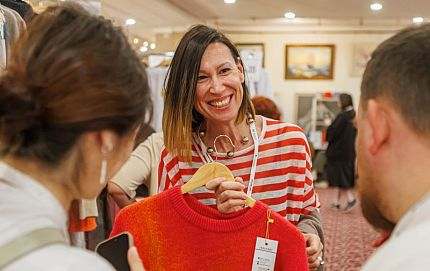
3 days, 200+ light industry factories, 10 countries: don't miss out on the leading industry event
From November 19 to 21, Moscow will host the 20th BEE-TOGETHER.ru exhibition, the main platform for fashion brands to find manufacturing partners.
Marina Gogua believes that a real sports outfit is not about gloss and fashionable prints, but about thoughtful design: how it fits, how it moves with the body, how it helps rather than hinders. The main thing is the logic of the cut, the quality of the fabric, and comfort, because true aesthetics are born where everything works perfectly, even if it is not immediately obvious.
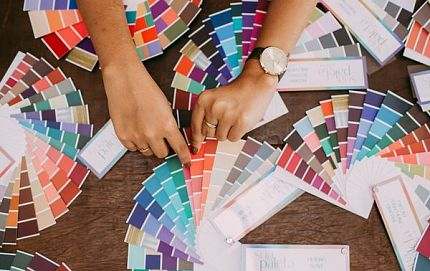
What colors will be the main ones in 2025 and 2025
We analyze the shades that will define the fashion industry in the coming seasons.

New names in print design. PROfashion's selection
We talk about young talents in the field of textile design.
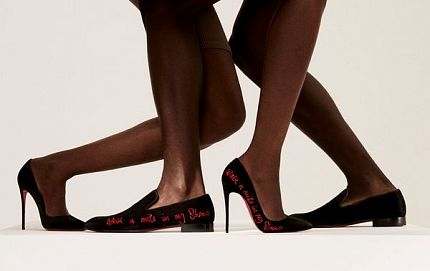
Higher or faster?
Will high heels remain in the lives of modern women?

Marina Gogua's ideas remind us that true luxury in sportswear is not about flashy logos or sequins. It's about thoughtful details, clever cuts, and high-quality materials. When form perfectly matches function, an item becomes more than just a piece of clothing; it becomes a tool for movement and self-expression.
Her approach changes the very perception of sports style. It is not about blindly following trends, but about paying attention to your own body and its needs. Convenience, freedom of movement, and comfort should come first. Glitz and bright details can only be an appropriate addition, not the essence.
Ultimately, this kind of design makes sportswear versatile. It works not only in the gym, but also in everyday life, giving you confidence and a sense of composure. It's an investment in yourself, where the main criterion for choice is not the external effect, but the internal feeling of “perfect fit.”